Symbolism and Significance of Double-headed Serpent
Tenochtitlan and Central Mexico, Aztec Empire, Mexico
Mythology
Symbolism
Cultural Studies
8 min read
Updated By: History Editorial Network (HEN)
Published:
Updated:
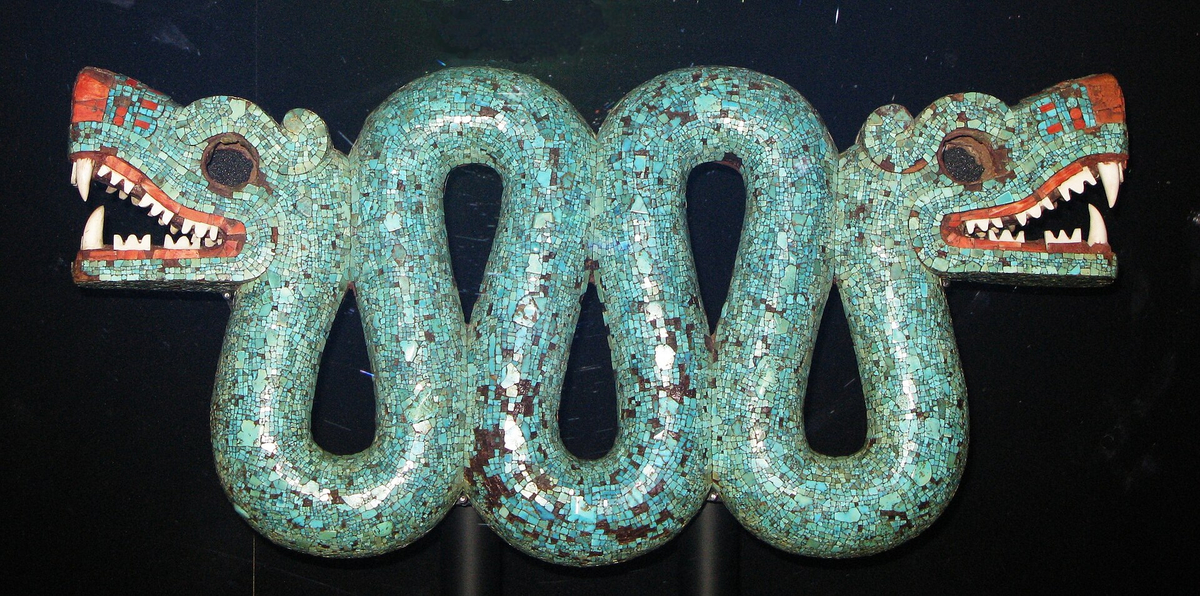
Around 1450, the double-headed serpent, known in Nahuatl as maquizcóatl, emerged as one of the most recognizable ceremonial symbols associated with the Aztec Empire. Frequently crafted in turquoise mosaic and other luxury materials, the image of the double-headed serpent held deep religious, political, and cosmological meaning within Mexica society. These elaborate ritual objects reflected the artistic sophistication of Late Postclassic Mesoamerica while also serving as symbols of divine authority, transformation, and imperial power.
One of the most famous surviving examples of the double-headed serpent is the turquoise mosaic sculpture now housed in the British Museum in London. Created during the height of the Aztec Empire, likely in the mid to late 15th century, the object consists of a carved wooden base covered with precisely cut turquoise tesserae, alongside details made from shell, conch, and red oyster shell. The serpent’s two heads face outward from opposite ends of the body, creating a symmetrical form associated with duality and supernatural balance in Mesoamerican belief systems.
Serpents occupied an important place in Aztec religion and iconography. They were connected to fertility, fire, water, warfare, rulership, and cosmic cycles. Feathered serpent imagery associated with Quetzalcoatl had already existed in Mesoamerica for centuries before the rise of the Mexica, and serpent symbolism remained central to religious art during the Aztec period. The double-headed form may have represented the connection between opposing forces such as life and death, earth and sky, or creation and destruction.
The use of turquoise carried additional symbolic meaning. In Mexica culture, turquoise was associated with fire, sacred authority, elite status, and divine energy. Because turquoise was not abundant in central Mexico, the stone arrived through long-distance trade routes extending into northern Mexico and the American Southwest. Mosaic artisans carefully assembled thousands of small turquoise fragments onto wooden ceremonial objects, producing some of the most technically advanced artworks of the Aztec world.
Scholars believe double-headed serpent mosaics may have functioned as ceremonial pectorals, ritual insignia, or elite regalia connected to rulers, priests, or high-ranking warriors. Some historians suggest they were worn or displayed during major religious ceremonies and state rituals linked to imperial ideology. The serpent’s imagery reinforced the sacred legitimacy of Mexica rulers, whose authority combined military leadership with religious symbolism.
The artistic techniques used to create these mosaics reflected specialized craft traditions inherited from earlier Mesoamerican civilizations, particularly the Mixtecs. Aztec artisans adapted and expanded these traditions within the imperial workshops of Tenochtitlan and other elite centers. Luxury mosaic works formed part of tribute systems and diplomatic exchanges throughout the empire and often featured prominently in temple offerings and ceremonial deposits.
Many surviving Aztec mosaic objects entered European collections during or after the Spanish conquest in the early 16th century. The double-headed serpent preserved in the British Museum is considered one of the finest surviving examples of pre-Columbian mosaic art and continues to be studied for its craftsmanship, symbolism, and historical context.
Historical Significance
The double-headed serpent illustrates how Aztec art combined religious symbolism, political authority, and technical craftsmanship into powerful ceremonial objects. Its survival provides modern historians and archaeologists with insight into Mexica beliefs about sacred power, duality, and imperial identity during the height of the Aztec Empire.
#mooflife
#MomentOfLife
#Double-headedSerpent
#MesoamericanCulture
#SpanishCedarWood
#BritishMuseum
#ArtifactSymbolism
Primary Reference
Masterpiece Story: Double-Headed Serpent

Explore the Life Moments of
 AI Twin