Discovery of the Coatlicue Statue
Zócalo, Mexico City, Mexico
Archaeology
Cultural Heritage
7 min read
Updated By: History Editorial Network (HEN)
Published:
Updated:
On 13/08/1790, workers excavating and repaving the central plaza of Mexico City, now known as the Zócalo, uncovered a monumental stone sculpture of the Aztec goddess Coatlicue. The statue had remained buried since the aftermath of the Spanish conquest of Tenochtitlan in 1521, when many Indigenous religious monuments were intentionally hidden, destroyed, or buried by colonial authorities seeking to suppress pre-Hispanic religious practices. The rediscovery of Coatlicue became one of the earliest major archaeological finds connected to the Mexica civilization in colonial Mexico.
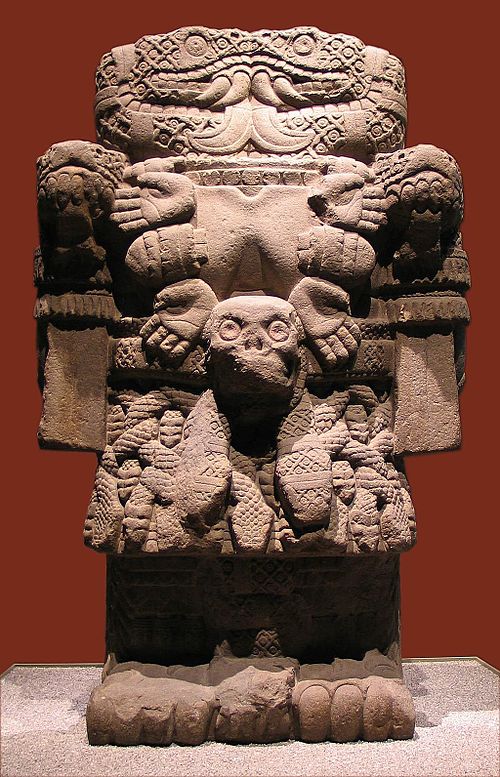
The sculpture was carved from andesite and stands approximately 2.5 meters tall. Coatlicue, whose name in Nahuatl is commonly translated as “She of the Serpent Skirt,” was a central mother goddess in Mexica religion associated with earth, fertility, life, and death. The statue presents a complex and striking visual composition that includes intertwined serpents, clawed hands and feet, skull motifs, and a skirt made of snakes. The decapitated neck is represented by two serpent heads facing each other, symbolizing streams of blood transformed into serpents according to Mexica artistic convention.
The discovery occurred only months before the unearthing of the Aztec Sun Stone on 17/12/1790, another major Mexica monument found in the same area of Mexico City. Together, these finds generated renewed scholarly interest in the civilizations that existed in central Mexico before Spanish colonization. Antonio de León y Gama, one of the leading intellectuals studying Indigenous antiquities in New Spain, documented and analyzed these discoveries during the late 18th century.
Colonial authorities reacted cautiously to the Coatlicue statue because of its powerful religious imagery. Although some scholars viewed it as an important historical artifact, others feared it could encourage renewed Indigenous spiritual practices. As a result, the statue was reportedly reburied for a period after its initial excavation before later being transferred into museum collections. During the 19th century, it became part of Mexico’s growing national archaeological heritage.
Today, the Coatlicue statue is housed in the National Museum of Anthropology in Mexico City, where it remains one of the museum’s best-known Mexica sculptures. Art historians and archaeologists consider it one of the most important surviving examples of Aztec monumental stone carving due to its scale, symbolism, and preservation.
The rediscovery of Coatlicue also contributed to changing attitudes toward Indigenous history in Mexico. During the late colonial and early national periods, scholars increasingly began documenting pre-Hispanic civilizations not only as conquered societies but also as complex cultures with sophisticated religious systems, artistic traditions, and urban development.
Historical Significance
The 1790 rediscovery of Coatlicue marked an important moment in the study of Mesoamerican civilizations because it exposed colonial-era Mexico to one of the most visually powerful surviving examples of Mexica religious art. Alongside the later excavation of the Sun Stone that same year, the find helped shape early archaeological interest in the Aztec past and influenced how Mexico preserved and interpreted its Indigenous heritage.
#mooflife
#MomentOfLife
#CoatlicueStatue
#AztecMythology
#ArchaeologicalDiscovery
#ZócaloExcavations
#Pre-columbianArtifacts
Primary Reference
Coatlicue statue

Explore the Life Moments of
 AI Twin