Decisive battle during the Islamic conquests against the Sassanid Empire.
Azerbaijan
Military
4 min read
Updated By: History Editorial Network (HEN)
Published:
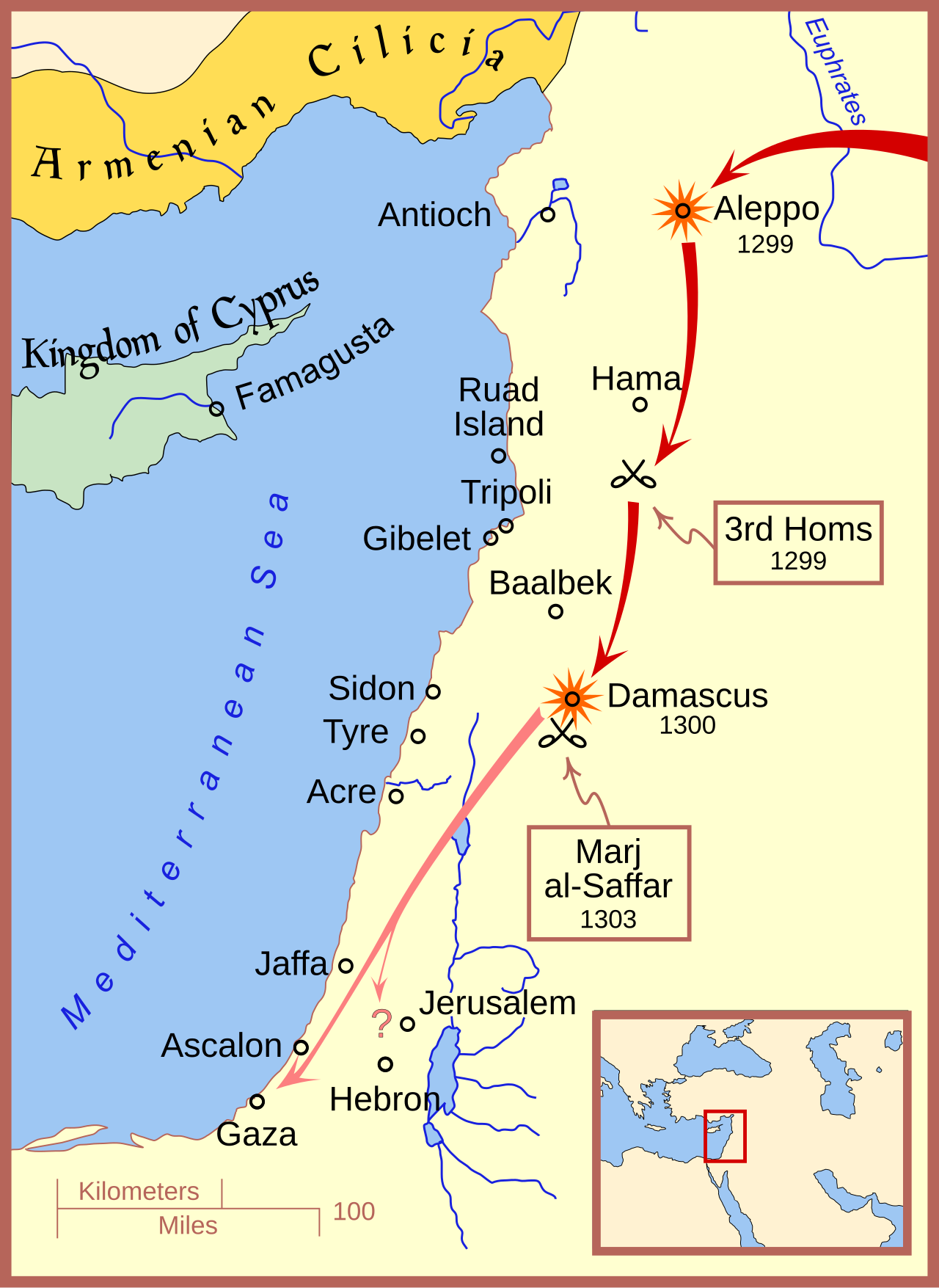
In the historical event referred to as 'The Battle of Marj al-Saffar,' the forces of the Ilkhanate, led by the Mongol general Ghazan Khan, clashed with the Mamluk Sultanate near the town of Marj al-Saffar. The Mamluks, under the leadership of Sultan Al-Nasir Muhammad, aimed to defend their territory, Egypt, against the Mongol invasion.
The confrontation arose due to the Ilkhanate's expansionist policies, seeking to extend Mongol control into the Middle East. The Mamluks, renowned for their military prowess, stood as a formidable obstacle to the Mongol advances. The battle marked a critical point in the struggle for dominance between the two powerful empires.
Despite their initial tactical advantage, the Mamluks faced a fierce and determined Ilkhanate army. The battle raged on, with both sides sustaining heavy casualties. Eventually, the Ilkhanate forces, utilizing their cavalry skills and superior strategy, gained the upper hand. The Mamluks suffered a significant defeat, leading to the Ilkhanate's temporary occupation of Syria.
The outcome of the Battle of Marj al-Saffar had far-reaching consequences. It weakened the Mamluk Sultanate's grip on the region and highlighted the Ilkhanate's military might. The Ilkhanate's incursion into the Middle East reshaped the geopolitical landscape, influencing power dynamics in the region for years to come.
This clash between the Ilkhanate and the Mamluks at Marj al-Saffar encapsulated the fierce competition for dominance during that era, underscoring the pivotal role of military strength in shaping history. The battle's repercussions reverberated throughout the Middle East, leaving a lasting impact on the balance of power in the region.
#BattleOfMarjAlSaffar #Ilkhanate #MamlukSultanate #MiddleEastHistory

Explore the Life Moments of
 AI Twin