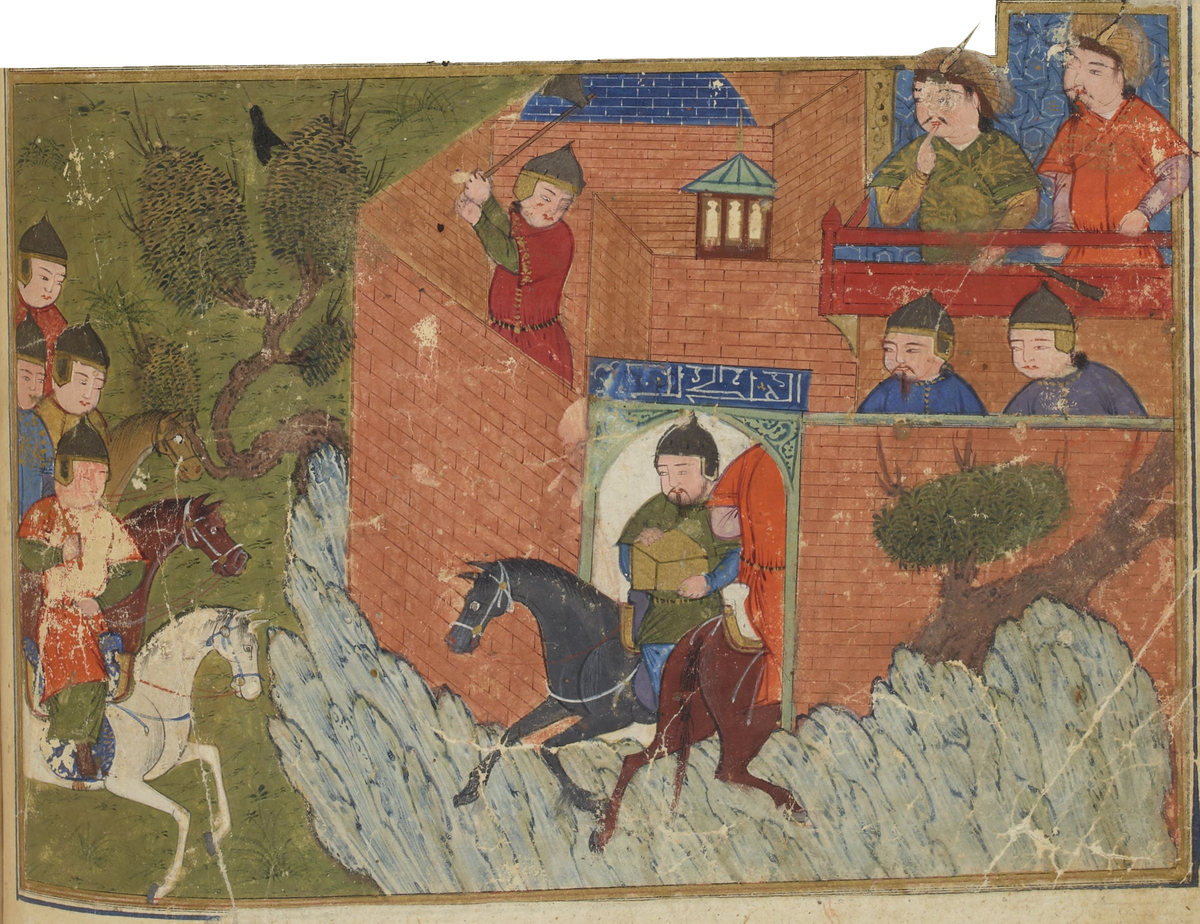
Siege and capture of Alamut Keep
Azerbaijan
Political
4 min read
Updated By: History Editorial Network (HEN)
Published:
Alamut, situated in present-day Azerbaijan, was known for being a stronghold of the Ismaili sect of Shia Islam. Recognized for its strategic location and impregnable fortifications, Alamut had withstood numerous sieges throughout history. The Mongols, led by Hulagu Khan, launched an assault on Alamut as part of their expansion into the region.
The Mongol forces besieged Alamut, cutting off supply routes and subjecting the stronghold to relentless attacks. Despite the Ismaili defenders' fierce resistance, the sheer might of the Mongol army proved overwhelming. The siege culminated in the fall of Alamut, as the Mongols breached the fortifications and captured the stronghold.
The capture of Alamut by the Mongols marked the end of the Ismaili presence in the region and dealt a significant blow to the sect's influence. The fall of Alamut also symbolized the Mongol conquest of Azerbaijan and their dominance over the surrounding territories. The event had far-reaching implications, reshaping the political and religious landscape of the region.
The Mongols' conquest of Alamut demonstrated their military prowess and their ability to overcome even the most formidable fortresses. It solidified Hulagu Khan's reputation as a formidable conqueror and further expanded the Mongol Empire's reach into the Middle East.
The siege and capture of Alamut by the Mongols remain a pivotal moment in Azerbaijani history, underscoring the region's significance in the broader context of medieval conquests and power struggles.
#Alamut #MongolConquest #AzerbaijanHistory #IsmailiStronghold

Explore the Life Moments of
 AI Twin