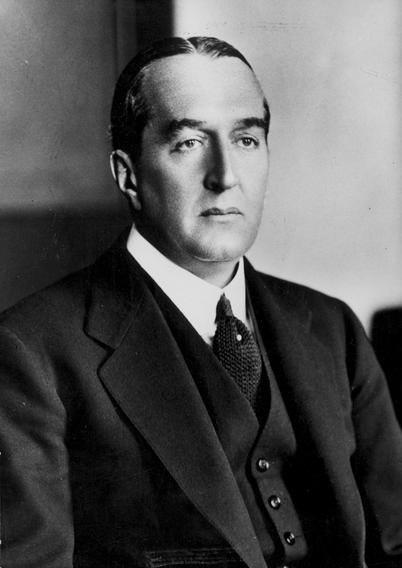
Stanley Bruce Reelected as Prime Minister
Australia
Political
Economic Development
4 min read
Updated By: History Editorial Network (HEN)
Published:
Updated:
In the election of 1925, Stanley Bruce was reelected as the Prime Minister of Australia. Born in 1883, Bruce served as the eighth Prime Minister of Australia from 1923 to 1929. He was known for his efforts in advancing social welfare policies and strengthening Australia's economy.
Stanley Bruce was a member of the Nationalist Party of Australia and had previously led a coalition government. His reelection in 1925 marked a significant moment in Australian politics as he continued to implement his vision for the country.
During his second term as Prime Minister, Bruce focused on policies that aimed to stimulate economic growth and improve living standards for Australians. He implemented initiatives to boost agriculture, expand trade, and enhance infrastructure development across the country.
Bruce's leadership style was characterized by his pragmatic approach to governance and his ability to navigate the complexities of Australian politics. His commitment to achieving national prosperity and social progress resonated with many Australians, leading to his reelection in 1925.
The reelection of Stanley Bruce as Prime Minister in 1925 had a lasting impact on the trajectory of Australian politics. His administration's policies laid the foundation for future developments in areas such as trade, industry, and social welfare.
Overall, the event marked a continuation of Stanley Bruce's leadership and his ongoing efforts to shape Australia's future. His reelection reflected the confidence placed in him by the Australian electorate and signaled a period of stability and progress for the country.
#StanleyBruce #PrimeMinister #AustraliaPolitics #EconomicDevelopment

Explore the Life Moments of
 AI Twin