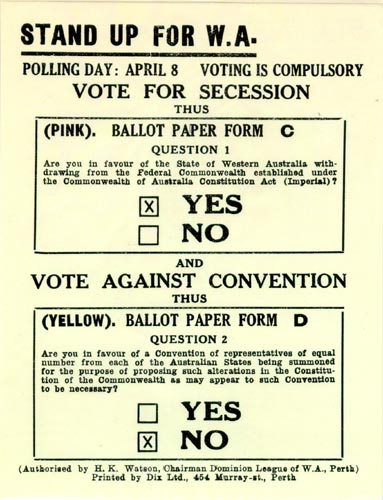
Referendum to Secede Ignored by Governments.
Australia
Political
4 min read
Updated By: History Editorial Network (HEN)
Published:
In a crucial event in Australian history, Western Australia voted in a referendum to secede from the Commonwealth. The sentiment to secede had been brewing for years due to economic disparities and perceived neglect by the federal government. On the day of the referendum, a majority of Western Australians expressed their desire for secession. However, both the Commonwealth and British governments chose to ignore the results, citing legal complexities and concerns over the potential domino effect on other states.
The impact of the referendum was significant, sparking heated debates and divisions among the population. Proponents of secession argued for greater autonomy and control over resources, while opponents feared the economic repercussions and potential isolation. The failure of the secession bid highlighted the challenges of balancing state and federal powers within the Australian federation.
Despite the setback, the desire for greater independence and local governance continued to influence Western Australia's political landscape in the years that followed. The referendum served as a reminder of the complexities inherent in Australia's federal system and the ongoing tensions between states and the central government.
The event underscored the deep-seated regional identities and aspirations within Australia, reflecting a push-and-pull dynamic between centralized authority and states' rights. The legacy of the referendum resonates in discussions about federalism, state powers, and the delicate balance between unity and diversity within the Australian political framework. #WesternAustralia #Secession #Referendum #AustralianHistory

Explore the Life Moments of
 AI Twin