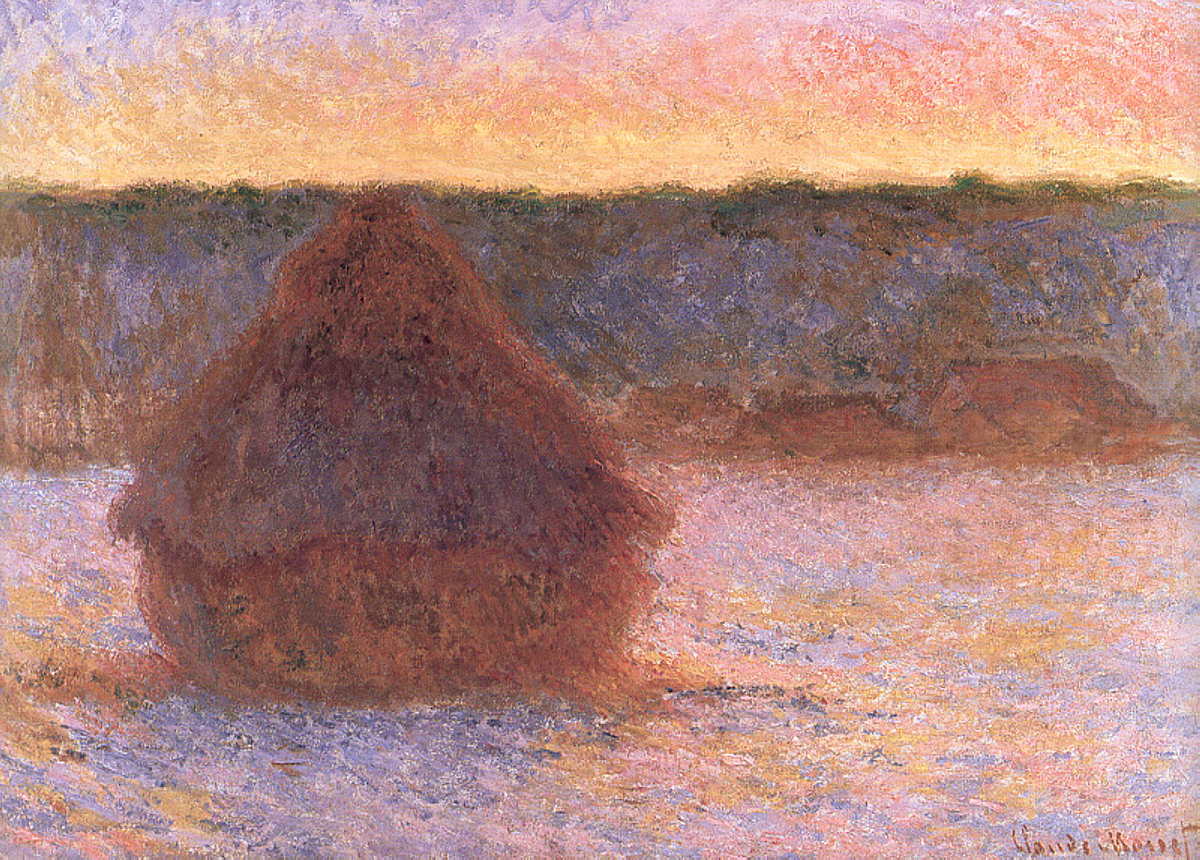
Monet's Haystacks Series and Sunset
Giverny, France
Art
Impressionism
Monet
4 min read
Updated By: History Editorial Network (HEN)
Published:
Updated:
Claude Monet's 'Haystacks' series, created between 1890 and 1891, represents a pivotal contribution to the Impressionist movement. This series consists of numerous paintings that depict haystacks in various lighting conditions and seasons, showcasing Monet's fascination with the effects of light and atmosphere on the landscape. The works are characterized by their loose brushwork and vibrant color palette, which capture the transient qualities of nature. The series includes notable pieces such as 'Haystacks (Sunset)', which exemplifies Monet's ability to convey the changing light at different times of the day. The paintings are housed in the Museum of Fine Arts in Boston, where they continue to attract significant attention from art enthusiasts and scholars alike.
The impact of Monet's 'Haystacks' series extends beyond its aesthetic appeal; it played a crucial role in the evolution of modern art. By focusing on the interplay of light and color rather than precise details, Monet challenged traditional artistic conventions and paved the way for future movements such as Post-Impressionism and Abstract art. The series also reflects the artist's innovative approach to plein air painting, where he worked outdoors to capture the essence of the landscape in real-time. Monet's exploration of perception and the fleeting nature of light has influenced countless artists and remains a subject of study in art history, illustrating the enduring legacy of his work in shaping contemporary artistic practices.
#mooflife
#MomentOfLife
#Monet
#Haystacks
#Impressionism
#ArtHistory
#MuseumOfFineArts
Primary Reference
Haystacks (Monet series)

Explore the Life Moments of
 AI Twin