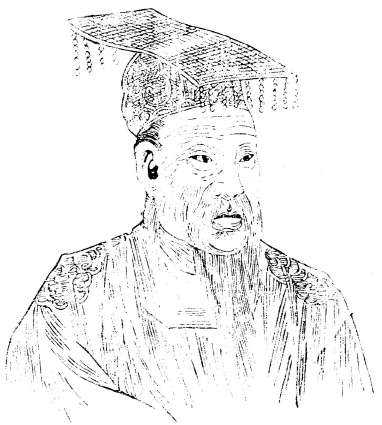
Wang Kŏn's Rise and Taebong's Fall
Songak (modern-day Kaesong), Korean Peninsula
Korean Dynasties
3 min read
Updated By: History Editorial Network (HEN)
Published:
Updated:
The year 918 CE marks the fall of Taebong and the rise of Wang Geon, who established the Goryeo Dynasty and reshaped the political order of the Korean Peninsula. This transition took place during the Later Three Kingdoms period, a time of fragmentation following the decline of Unified Silla, when multiple regional powers competed for control.
Wang Geon was originally a naval commander serving under Gung Ye, the ruler of Taebong, a state that had emerged from the remnants of Goguryeo. Over time, Gung Ye’s rule became increasingly unstable, with historical records describing harsh governance and growing dissatisfaction among his officials and military leaders. In 918, a group of high-ranking officials and generals deposed Gung Ye and elevated Wang Geon to the throne.
After taking power, Wang Geon established a new state named Goryeo, deriving its name from Goguryeo, an earlier kingdom of the region. He set his capital at Songak (modern-day Kaesong) and began consolidating control over surrounding territories. His leadership combined military campaigns with diplomatic efforts, including alliances and the integration of local elites, which helped strengthen the foundation of the new dynasty.
The establishment of Goryeo in 918 marked the beginning of a new ruling dynasty that would last until 1392. Over the following years, Wang Geon continued efforts to unify the Korean Peninsula, culminating in the defeat of rival states and the eventual unification in 936.
#mooflife
#MomentOfLife
#WangKŏn
#Goryeo
#Taebong
#KoreanHistory
#Unification
Primary Reference
Taejo of Goryeo

Explore the Life Moments of
 AI Twin