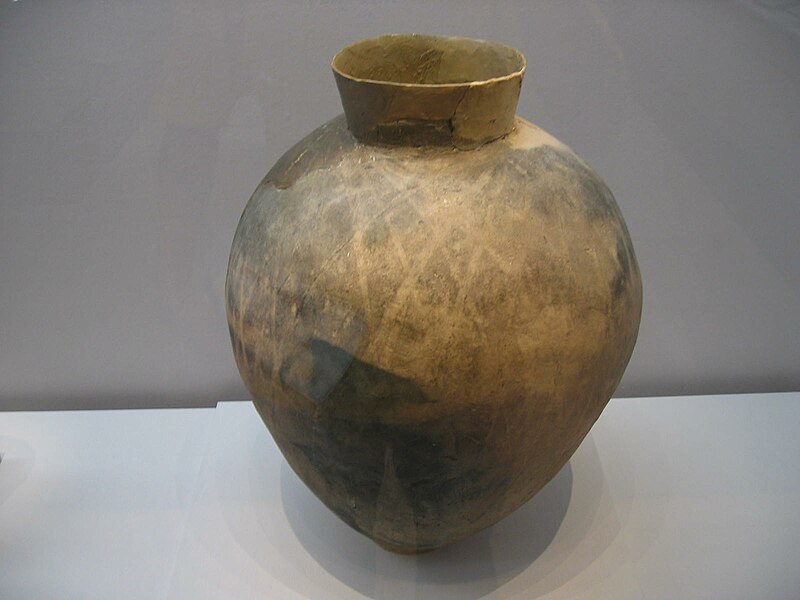
Start of Mumun Pottery Period
Korean Peninsula
Archaeology
Korean History
Agricultural Development
4 min read
Updated By: History Editorial Network (HEN)
Published:
Updated:
The Mumun Pottery Period, dated approximately from 1500 BCE to 300 BCE, marks a major transformation in ancient Korean history as communities shifted from primarily mobile subsistence patterns to more settled, agriculture-based societies. This period followed the earlier Jeulmun pottery era and is distinguished by significant changes in material culture, settlement structure, and economic practices across the Korean Peninsula.
The term “Mumun,” meaning “plain” or “undecorated,” refers to the style of pottery produced during this time, which lacked the comb-patterned designs characteristic of earlier periods. Archaeological findings show that Mumun pottery was simpler in appearance but associated with more advanced forms of production and daily use. During this period, communities increasingly relied on agriculture, particularly the cultivation of millet and rice, which supported larger and more permanent settlements.
Evidence from excavation sites indicates the development of organized villages with pit houses and storage facilities, reflecting a more stable way of life. The expansion of agriculture also contributed to population growth and changes in social organization. Burial practices, including the construction of dolmens and other tomb structures, suggest the emergence of social differentiation and leadership within communities.
The Mumun period laid important foundations for later historical developments, including the formation of early states such as Gojoseon. The transition to settled agricultural life during this era represents a key stage in the long-term evolution of society on the Korean Peninsula.
#mooflife
#MomentOfLife
#MumunPotteryPeriod
#KoreanHistory
#Agriculture
#SocialComplexity
#BronzeProduction
Primary Reference
Mumun pottery period

Explore the Life Moments of
 AI Twin