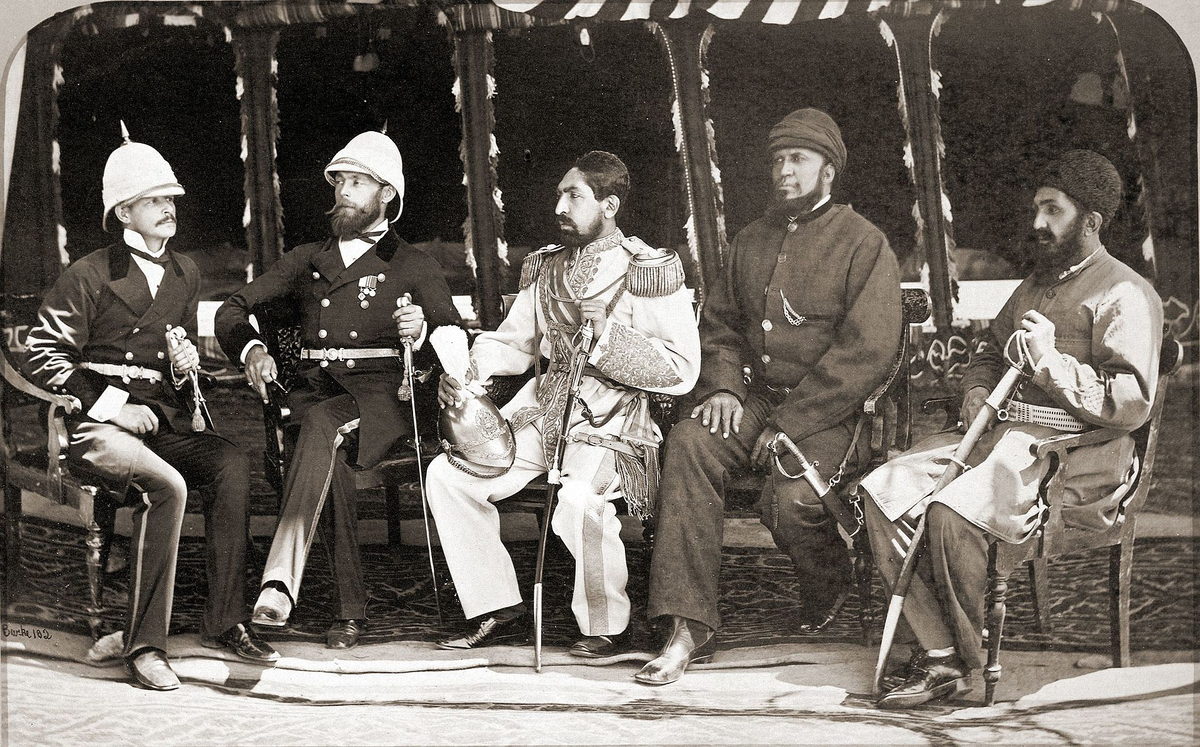
Treaty solidifies British dominance over Afghan diplomatic matters through Gandamak agreement.
Afghanistan

Political
Global Trade
3 min read
Updated By: History Editorial Network (HEN)
Published:
Amid escalating tensions and power struggles in the region, the Treaty of Gandamak was drafted to solidify British control over Afghan foreign affairs. The British sought to maintain influence in Afghanistan to curb Russian advancements in the region and safeguard their strategic interests. The treaty, named after the village where it was signed, established the British envoy as the sole representative for Afghanistan in dealings with other nations.
The terms of the treaty vastly restricted the Afghan ruler's autonomy in conducting foreign relations, effectively placing the country under British guidance. Despite initial hopes for stability, the treaty ultimately proved to be fragile and contentious. It faced significant opposition from Afghan tribal leaders and incited further rebellions against foreign intervention.
The Treaty of Gandamak underscored the precarious balance of power in the region and highlighted the complexities of imperial politics in the late 19th century. Its legacy resonated in subsequent Afghan-British relations and influenced the country's trajectory towards independence and sovereignty. The treaty exemplified the challenges of external control and the enduring struggle for autonomy in Afghan history.
#TreatyofGandamak #BritishControl #AfghanistanForeignAffairs #ImperialPolitics
Explore the Life Moments of
 AI Twin