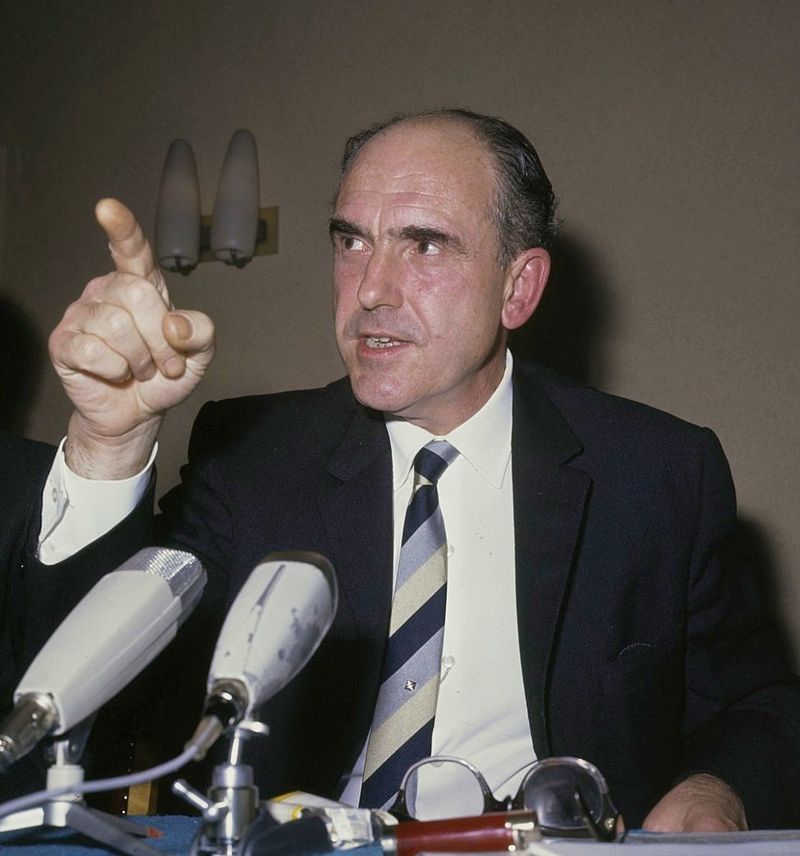
Andreas Papandreou becomes the New Prime Minister of Greece
Greece
Political
Social Change
4 min read
Updated By: History Editorial Network (HEN)
Published:
In 1981, Andreas Papandreou became the new Prime Minister of Greece after the Panhellenic Socialist Movement (PASOK) party secured a significant election victory. Papandreou, a charismatic leader and economist, led PASOK to its first electoral triumph, ending nearly four decades of conservative rule in Greece.
With a platform focused on social reform and anti-austerity measures, Papandreou's election marked a turning point in Greek politics. His government implemented policies to strengthen the welfare state, nationalize industries, and improve workers' rights, garnering support from the working class and marginalized communities.
Internationally, Papandreou pursued a non-aligned foreign policy, advocating for Greek sovereignty and independence from Western influence. He also aimed to foster closer ties with other Mediterranean countries and the global south.
Papandreou's leadership style was characterized by populism and a strong emphasis on grassroots mobilization. His administration prioritized social justice, education, and healthcare, expanding access to public services and increasing government spending to stimulate the economy.
Despite facing economic challenges and political opposition, Papandreou's tenure brought about significant social change and improved living standards for many Greeks. His legacy as a progressive and transformative leader continues to influence Greek politics to this day.
#AndreasPapandreou #GreekPrimeMinister #PASOKParty #SocialReform #PoliticalChange #ProgressiveLeadership

Explore the Life Moments of
 AI Twin