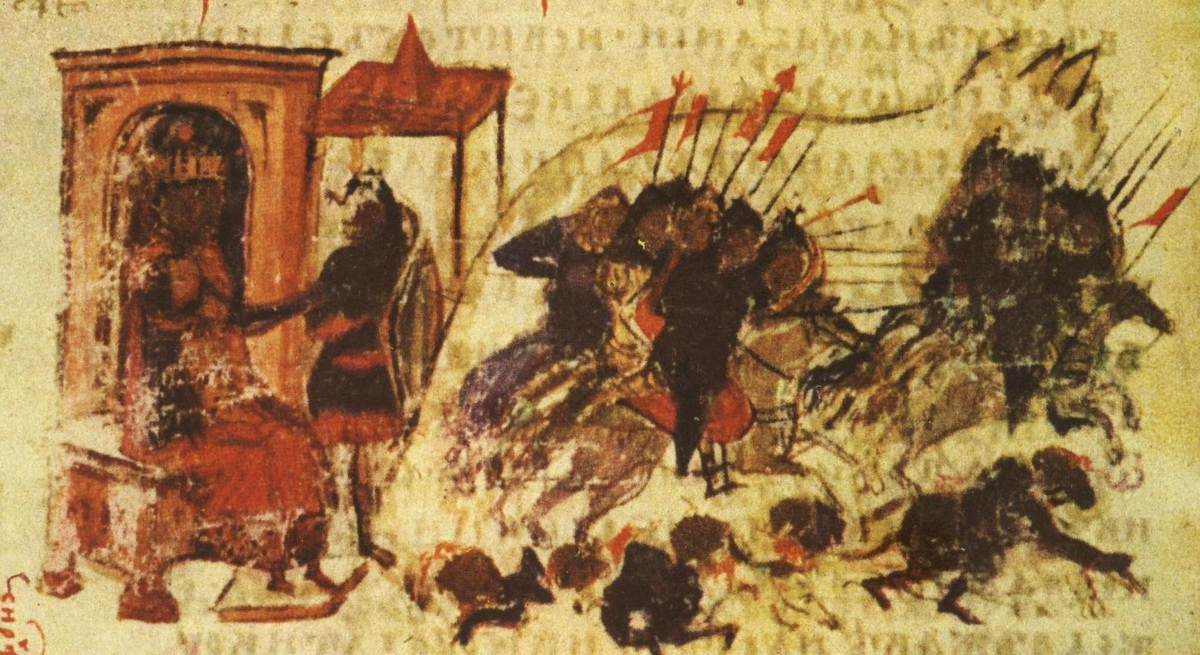
Byzantine Capital's Victory Over Arab Siege
Greece
Military Strategic Defense
4 min read
Updated By: History Editorial Network (HEN)
Published:
During the eighth century, the Byzantine Empire faced a major threat as Arab forces attempted to conquer Constantinople. The city's strategic location made it a prized target, leading to the Arabs laying siege to the capital for multiple years.
The defense of Constantinople showcased remarkable tactics and resilience by the Byzantine defenders. The city's fortifications, including its massive walls and chain across the harbor, played a crucial role in repelling the Arab attacks. Additionally, the Byzantines used Greek fire, a highly effective incendiary weapon, to devastating effect against the Arab fleet.
The successful defense of Constantinople had significant historical implications. It not only preserved the Byzantine Empire's capital but also halted the Arab expansion into Europe. The resilience demonstrated by the Byzantines also solidified the city's reputation as an impregnable fortress, deterring future would-be conquerors for centuries to come.
The event highlighted the importance of strategic defense mechanisms in warfare and the role of innovation in repelling superior forces. The Byzantine victory at Constantinople underscored the significance of geography and military ingenuity in shaping the course of history.
The defense of Constantinople against the Arab siege remains a enduring symbol of courage, tenacity, and strategic brilliance in the face of overwhelming odds. The event serves as a reminder of the pivotal role that key cities and fortified positions have played throughout history in shaping the outcome of conflicts.
#ByzantineEmpire #GreekFire #ArabSiege #Constantinople #MilitaryHistory #StrategicDefense
Primary Reference
Siege of Constantinople (717–718) - Wikipedia

Explore the Life Moments of
 AI Twin