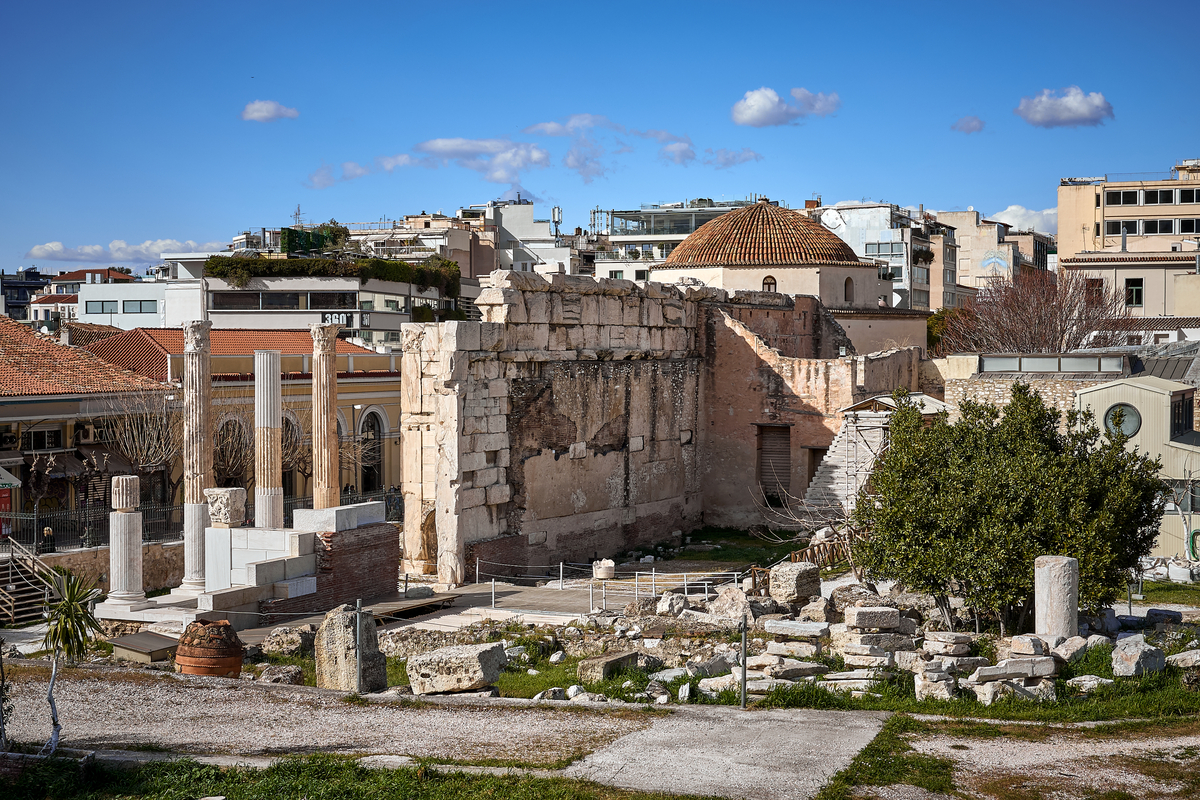
Construction of Library of Hadrian in Athens by Roman Emperor Hadrian.
Greece
Education
4 min read
Updated By: History Editorial Network (HEN)
Published:
During the reign of the Roman Emperor Hadrian, he visited Athens and directed the construction of the Library of Hadrian. The library was part of Hadrian's urban renewal program, aimed at revitalizing the city of Athens and showcasing Roman cultural influence.
The Library of Hadrian was a magnificent architectural structure that served as a public library, cultural center, and a tribute to the emperor. It was located to the north of the Acropolis and contained lecture halls, reading rooms, gardens, and a courtyard with pools and fountains. The façade was adorned with elaborate artwork and inscriptions honoring the Greek intellectual heritage.
The construction of the Library of Hadrian had a significant impact on Athens, elevating the city's status as a center of learning and culture in the Roman Empire. It provided access to a vast collection of scrolls and manuscripts, attracting scholars, philosophers, and students from across the empire. The library became a hub for intellectual exchange and scholarship, fostering a deeper appreciation for literature, philosophy, and the arts.
Hadrian's decision to build the library in Athens reinforced the city's reputation as a beacon of knowledge and wisdom. It symbolized the harmonious blend of Roman and Greek traditions, highlighting the emperor's respect for Athenian heritage and intellectual pursuits.
The Library of Hadrian stood as a lasting testament to Hadrian's vision of promoting education and culture throughout the empire. Its legacy endures as a reminder of the enduring influence of the Roman Empire on ancient Greek civilization.
#HadriansLibrary #AthensCulture #RomanEmperor #AncientScholarship
Primary Reference
University of Groningen Religious encounters on the southern ...

Explore the Life Moments of
 AI Twin