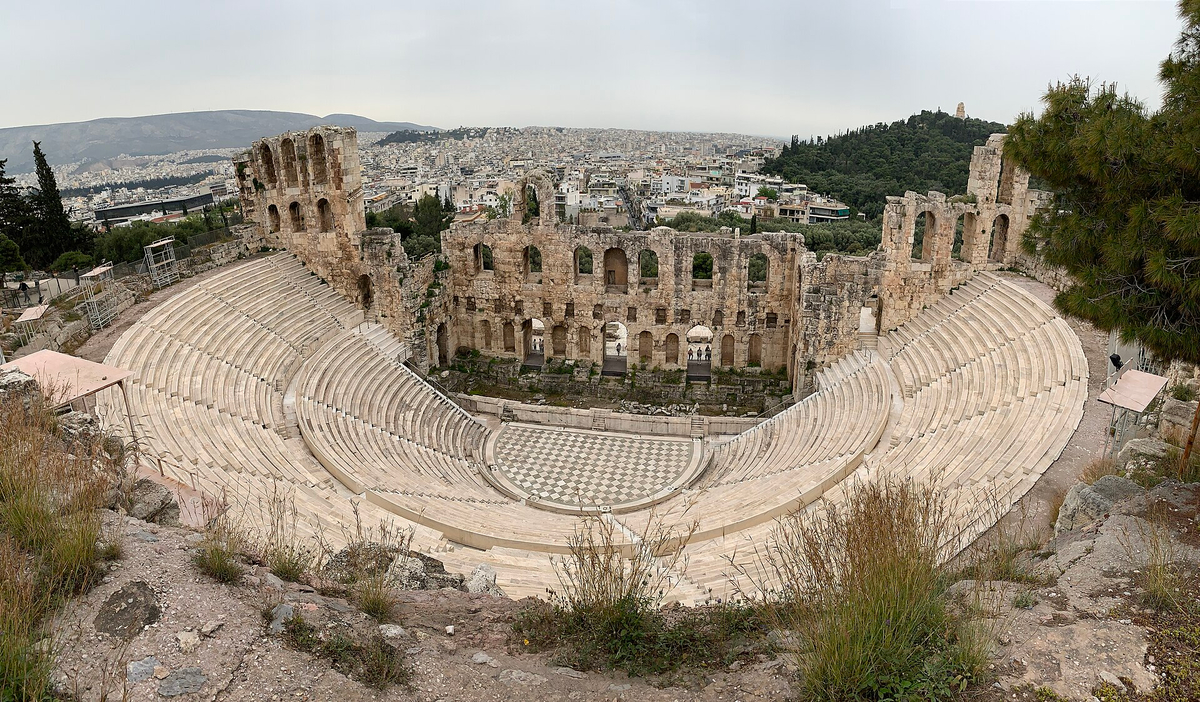
Herodes Atticus Builds Iconic Theater in Athens
Greece

Entertainment
4 min read
Updated By: History Editorial Network (HEN)
Published:
During the early 2nd century, Herodes Atticus, a prominent Greek aristocrat and rhetorician, built the Odeon in Athens. This monumental project aimed to honor his late wife, Aspasia Annia Regilla. The Odeon served as a venue for musical performances, poetry readings, and other cultural events, attracting elite audiences from across the Roman Empire.
Constructed with lavish materials such as marble and adorned with intricate decorations, the Odeon exemplified the wealth and influence of Herodes Atticus. Its design incorporated a wooden roof, allowing for all-weather performances and ensuring the comfort of the spectators. This Roman theater maintained its function over the centuries and still hosts performances to this day, a testament to its enduring legacy.
The Odeon's construction contributed to the cultural vibrancy of Athens, solidifying its reputation as a center for arts and intellectual pursuits in the ancient world. The theater's acoustics were lauded for their exceptional quality, enhancing the audience's experience of the performances. Artists and scholars alike were drawn to the Odeon, further enriching the intellectual atmosphere of the city.
Herodes Atticus's patronage of the arts and his dedication to preserving the memory of his wife through the construction of the Odeon underscored his prominence in Greek society. His legacy endured not only through the architectural marvel he left behind but also through the cultural impact of the performances held within its walls.
#HerodesAtticus #OdeonAthens #RomanTheater #CulturalLegacy #AthenianArts #AncientGreece
Primary Reference
(PDF) Proceedings of the XII. Asmosia | Burak Yolaçan and A ...

Explore the Life Moments of
 AI Twin