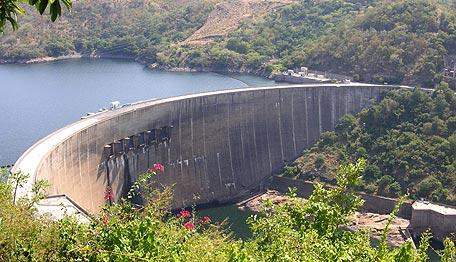
Building Kariba Dam on Zambezi River
Zimbabwe
Technology
5 min read
Updated By: History Editorial Network (HEN)
Published:
The construction of the Kariba Dam on the Zambezi River commenced as a notable engineering project. Situated on the border between the then Federation of Rhodesia and Nyasaland (now Zimbabwe) and Zambia, this colossal infrastructure aimed to regulate the river's flow and supply hydroelectric power.
The genesis of this project lay in the region's burgeoning demand for electricity. The area's economic development necessitated a reliable and substantial power source. The Zambezi River, Africa's fourth-longest river, was identified as an optimal location due to its perennial high-water flow and strategic positioning between the two territories. The project secured substantial investment partly through the World Bank, cementing its status as an international endeavor.
The primary structure, an arch-shaped dam, stands 128 meters tall and extends 579 meters across the river, creating Lake Kariba. This reservoir holds approximately 180 cubic kilometers of water, covering an area of 5,580 square kilometers, making it one of the world's largest human-made lakes. The lake's formation led to the displacement of the local Tonga people, who resided in the Zambezi Valley. The operation to relocate around 57,000 individuals drew significant international attention, highlighting the project's socio-economic repercussions.
On completion, its primary purpose became evident: generating hydroelectric power. The dam's hydroelectric power station boasts an initial installed capacity of 1,320 megawatts, providing a vital energy source for both Zimbabwe and Zambia. This had a profound impact on industrial growth, triggering an era of rapid development and modernization in the region. However, it also introduced several environmental challenges. The formation of Lake Kariba altered local ecosystems, impacting fisheries, agriculture, and wildlife. Efforts to mitigate these effects have been ongoing, with varying degrees of success.
In summary, the Kariba Dam project was a keystone in southern Africa's industrial narrative, shaping the energy landscape and fostering development while also implicating environmental and social concerns. Its legacy continues to influence the region, underscoring the complex interplay between human ambition and natural systems.
#MoofLife #KaribaDam #ZambeziRiver #HydroelectricPower #ZimbabweHistory #Development #EngineeringFeats #EnvironmentalImpact

Explore the Life Moments of
 AI Twin