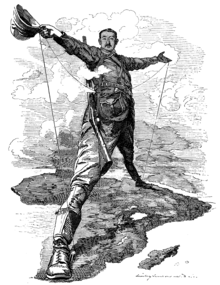
British protectorate established, British South Africa Company administration ends.
Political
Economic Downturn
5 min read
Updated By: History Editorial Network (HEN)
Published:
Northern Rhodesia transitioned from British South Africa Company administration to a British protectorate. The British South Africa Company, led by Cecil Rhodes, had established economic and administrative control in the late 19th century, focusing on mineral extraction and land settlement. Its governance structure relied on maximizing profits through mining, particularly copper.
Tensions arose due to the company's heavy economic focus and limited investment in local infrastructure and social services. This led to dissatisfaction among the local population and European settlers. The economic benefits were largely reaped by the company, neglecting the broader development needs of the territory.
As a protectorate, Northern Rhodesia witnessed significant administrative changes. The British government took direct control, emphasizing more balanced development. The shift aimed to incorporate better educational, health, and infrastructural developments, improving living standards. The administration began to implement policies aimed at social development in higher contrast to the profit-driven strategies of the British South Africa Company.
Mining remained a crucial economic pillar but now incorporated more structured regulations under the new administrative approach. Local governance and participation in decision-making processes saw gradual improvements. European settlers continued to dominate the political landscape, but there was an incremental shift towards addressing broader societal needs.
The change to protectorate status marked an evolving phase in Northern Rhodesia's path towards modernization. British administrative models introduced new governance frameworks, laying foundations for future developments. This period was characterized by a shift from corporate to colonial governance, reflecting broader colonial policy trends in Africa at the time.
Mining output, particularly copper, began to expand under more regulated environments, contributing to Northern Rhodesia's economic footprint in the region. This transition played a foundational role in shaping the territory's socio-economic landscape, influencing its eventual journey towards independence.
Relevant hashtags capture the essence of this administrative evolution: #NorthernRhodesia #BritishProtectorate #ColonialHistory #MiningEconomy #ZambiaHistory #MoofLife
Primary Reference
Northern Rhodesia - Wikipedia
Explore the Life Moments of
 AI Twin