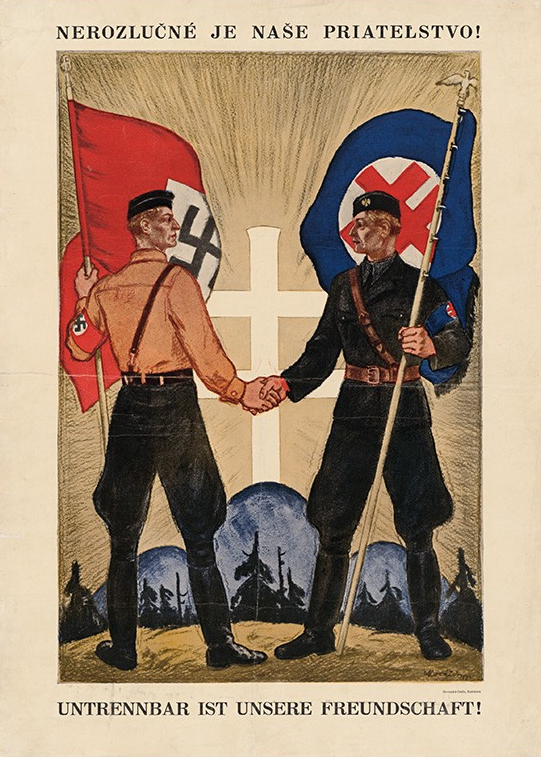
Slovak Republic signs Tripartite Pact
Germany
Historical Events
International Relations
World War II
4 min read
Updated By: History Editorial Network (HEN)
Published:
Updated:
The Slovak Republic's signing of the Tripartite Pact marked a pivotal alignment with the Axis powers during World War II. The Tripartite Pact was a military alliance formed between Germany, Italy, and Japan, aimed at mutual support and cooperation against the Allied forces. By signing this agreement, the Slovak Republic sought to solidify its position in the geopolitical landscape of Europe, aligning itself with the dominant powers of the time. This decision was influenced by the desire for security and recognition, as the Slovak Republic was a newly established state following the disintegration of Czechoslovakia. The pact not only formalized Slovakia's allegiance to the Axis but also facilitated military and economic cooperation with Germany, which had significant implications for the region's stability and the Slovak military's operational capabilities.
The impact of the Slovak Republic's decision to join the Tripartite Pact was profound. It allowed Slovakia to receive military support from Germany, which included equipment and training for its armed forces. This alignment also led to Slovakia's involvement in military operations alongside German forces, particularly on the Eastern Front against the Soviet Union. The consequences of this alliance were far-reaching, as it contributed to the broader conflict in Europe and affected the Slovak population, who faced the repercussions of war and occupation. The signing of the Tripartite Pact is a critical event in understanding Slovakia's role during the war and the complexities of its national identity in the context of Axis collaboration.
#mooflife
#MomentOfLife
#SlovakRepublic
#TripartitePact
#WorldWarIi
#AxisPowers
#GeopoliticalAlliances
Primary Reference
Slovak Republic (1939–1945)

Explore the Life Moments of
 AI Twin