Second Vienna Award by Hitler and Mussolini
Germany


Politics
3 min read
Updated By: History Editorial Network (HEN)
Published:
Updated:
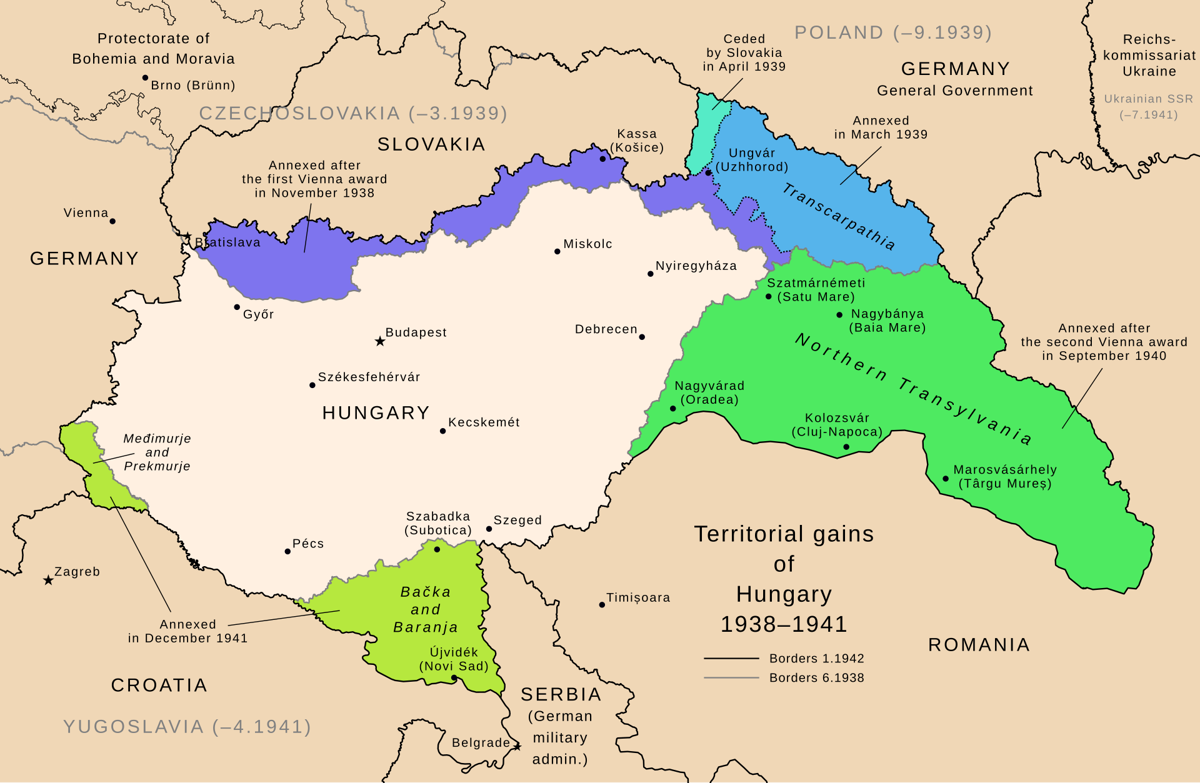
The Second Vienna Award was a diplomatic agreement imposed by Adolf Hitler and Benito Mussolini that resulted in Romania ceding Northern Transylvania to Hungary. This decision was part of a broader strategy by the Axis powers to redraw borders in Eastern Europe, particularly in the context of the shifting alliances and territorial disputes following World War I. The award was a direct consequence of the political and military pressures exerted by Nazi Germany and Fascist Italy, which sought to expand their influence in the region. The territories transferred included significant areas such as the entire Maramureș and parts of Crișana, which had a diverse population and historical ties to both Romania and Hungary. The award was met with resistance from Romania, which viewed it as an infringement on its sovereignty and territorial integrity. The loss of Northern Transylvania had lasting implications for Romanian national identity and its geopolitical stance in the region, contributing to tensions that would later escalate during the war. The Second Vienna Award exemplified the aggressive expansionist policies of the Axis powers and their willingness to use coercion to achieve territorial gains, setting a precedent for further conflicts in Eastern Europe. The impact of this award was felt not only in Romania and Hungary but also influenced the dynamics of regional politics, as it highlighted the fragility of national borders and the complexities of ethnic relations in the area.
#mooflife
#MomentOfLife
#SecondViennaAward
#HitlerMussolini
#RomaniaHungaryRelations
#NorthernTransylvania
#WorldWarIi
Primary Reference
Second Vienna Award

Explore the Life Moments of
 AI Twin