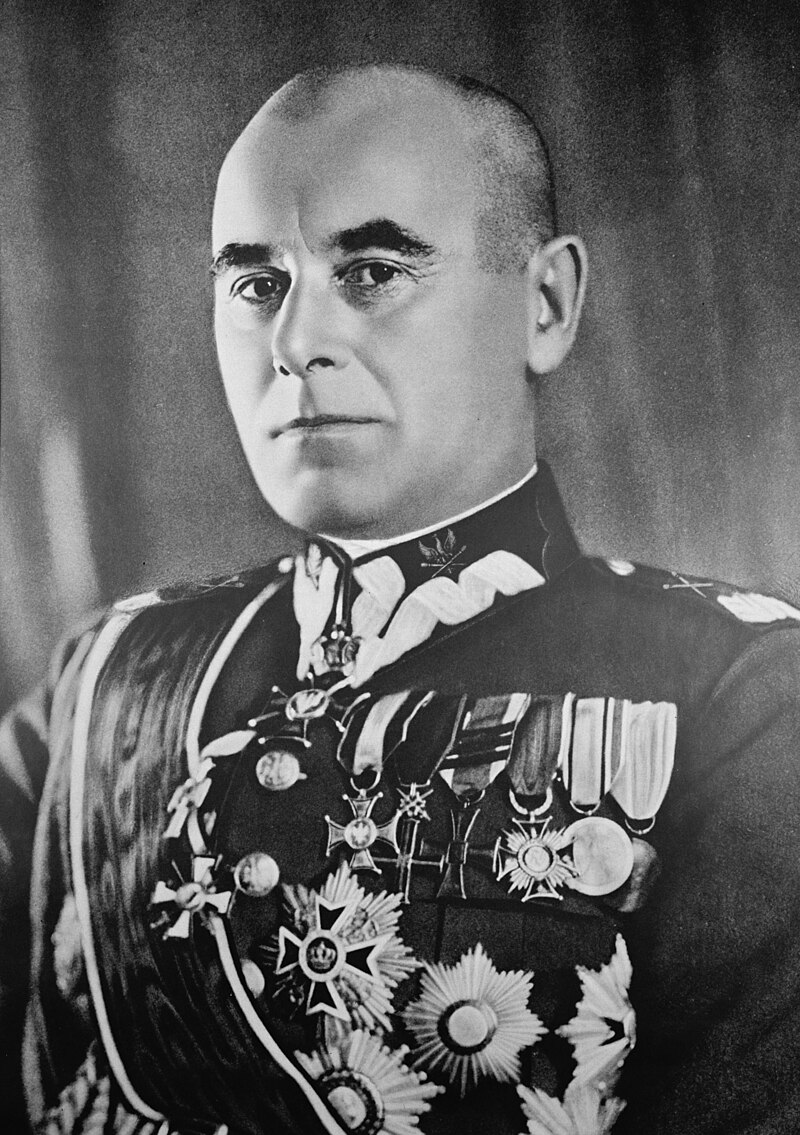
Polish government and High Command interned in Romania
Germany
Politics
Military
4 min read
Updated By: History Editorial Network (HEN)
Published:
Updated:
In the context of World War II, the Polish government and military leadership faced a critical situation as they were forced to evacuate Poland due to the advancing German forces. The Polish government, led by President Ignacy Mościcki and Commander-in-Chief Edward Rydz-Śmigły, made the decision to flee to Romania, a neutral country at the time. Upon their arrival, they were interned by the Romanian authorities, which limited their ability to operate as a government in exile. This internment was a significant setback for the Polish leadership, as it hindered their efforts to organize resistance against the German invasion and to seek support from the Allies. The internment also reflected the precarious position of Poland in the geopolitical landscape of Eastern Europe during the early stages of the war, as the country found itself caught between the ambitions of Nazi Germany and the Soviet Union, which had also invaded Poland shortly after the German attack.
The internment of the Polish government and High Command in Romania had lasting implications for the Polish state and its military strategy. While in Romania, the Polish leaders worked to maintain international awareness of their plight and sought to rally support from other nations. The internment also led to the establishment of Polish military units in France and later in the United Kingdom, which played a crucial role in the Allied war effort. The Polish government in exile continued to operate from abroad, advocating for Polish interests and contributing to the broader fight against Axis powers. This period marked a transition for Poland from a sovereign nation to one that had to navigate the complexities of international diplomacy and military alliances in a time of crisis.
#mooflife
#MomentOfLife
#PolishGovernment
#WorldWarIi
#Romania
#MilitaryLeadership
#Internment

Explore the Life Moments of
 AI Twin