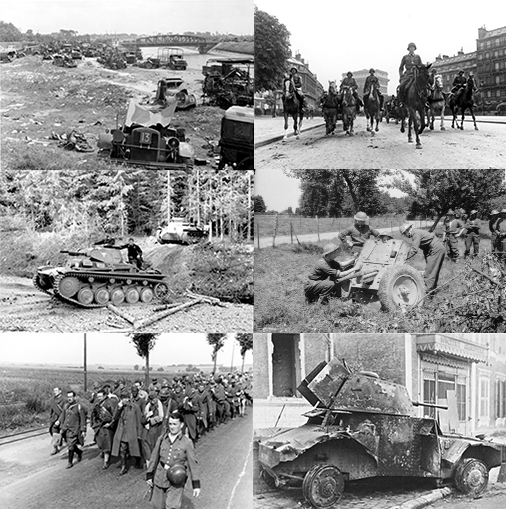
Germany invades France and Benelux
Germany


World War II
Military History
European History
4 min read
Updated By: History Editorial Network (HEN)
Published:
Updated:
The invasion of France and the Benelux countries by Germany marked a pivotal moment in World War II, characterized by a rapid and aggressive military strategy known as Blitzkrieg. This offensive began with the invasion of Luxembourg, Belgium, and the Netherlands, leading to the swift capture of key locations. German paratroopers executed a surprise attack on the Belgian fort Eben Emael, which was a significant tactical move aimed at crippling Belgian defenses. However, the operation faced setbacks, notably during the Battle for The Hague, where Dutch forces successfully repelled the German paratroopers, marking it as the first failed paratrooper attack in military history. The German strategy relied on speed and coordination, utilizing mechanized infantry and air support to overwhelm enemy positions quickly.
In response to the escalating threat, Belgium declared a state of emergency, and the United Kingdom, under the leadership of newly appointed Prime Minister Winston Churchill, took decisive actions, including the invasion of Iceland to secure strategic positions in the North Atlantic. Churchill's government was formed as a wartime coalition, reflecting the urgency of the situation. The German offensive not only altered the landscape of the Western Front but also prompted a reevaluation of military strategies among the Allied forces. The rapid fall of France and the Benelux countries to German control had profound implications, leading to a shift in the balance of power in Europe and setting the stage for further conflicts in the war.
#mooflife
#MomentOfLife
#GermanyInvasion
#WorldWarIi
#Blitzkrieg
#WinstonChurchill
#BelgiumEmergency
Primary Reference
Battle of France

Explore the Life Moments of
 AI Twin