Battle of Ortona
Germany


4 min read
Updated By: History Editorial Network (HEN)
Published:
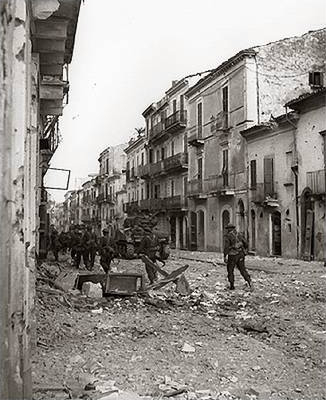
The Battle of Ortona took place from 20 to 28 December 1943 in the Italian coastal town of Ortona, as part of the Allied advance up the Adriatic side of the Italian peninsula. The engagement was fought primarily between the 1st Canadian Infantry Division, under Major General Christopher Vokes, and elements of the German 1st Parachute Division, an elite formation commanded by General Richard Heidrich.
Ortona, a medieval port city, held strategic importance as a supply hub and anchor point of the German Winter Line defenses. The battle quickly became characterized by intense urban combat, one of the few large-scale street battles involving Canadian forces during the Second World War. German troops employed well-prepared defensive tactics, including fortified buildings, booby traps, and machine-gun nests. Canadian forces, advancing house by house, developed a method known as “mouse-holing,” blasting through walls with explosives to avoid open streets and clear buildings systematically.
The fighting was brutal and slow, with both sides sustaining heavy casualties. The narrow streets, rubble, and winter conditions compounded the difficulties. By 28 December, the Germans withdrew, and Canadian troops secured the town.
The Battle of Ortona resulted in approximately 1,375 Canadian casualties, while German losses remain uncertain. Though relatively small in scale compared to other battles, Ortona gained symbolic importance in Canada as evidence of determination and sacrifice. Strategically, its capture aided the gradual Allied push northward, though progress against the Winter Line remained costly and slow.
#MomentsOfLife #MoofLife_Moment #MoofLife #WWII #Ortona #ItalyCampaign #CanadianArmy #UrbanWarfare
Primary Reference
Battle of Ortona

Explore the Life Moments of
 AI Twin