Vladimir Lenin's Return: Sparking Revolution in Russia with German Support.
Germany
Political
Global Trade
5 min read
Updated By: History Editorial Network (HEN)
Published:
Updated:
Vladimir Lenin, the leader of the Bolshevik Party, returned to Russia from exile, arriving in Petrograd with considerable German support. At the time, Russia was embroiled in World War I, and the situation within the country was volatile. The February Revolution had recently led to the abdication of Tsar Nicholas II, resulting in the establishment of a provisional government. However, this new government continued Russia’s involvement in the war, which was increasingly unpopular among the war-weary populace.
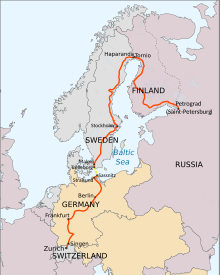
Lenin's return was facilitated by the German government, which saw upheaval in Russia as a strategic advantage. Should Russia withdraw from World War I, it would alleviate the pressure on Germany's Eastern Front. Lenin’s journey involved a sealed train provided by the Germans, ensuring he could cross their territory without arrest.
Upon his arrival in Petrograd, Lenin called for an end to Russia’s participation in the war, advocating for peace, land for peasants, and power to the Soviets (workers' councils). This was encapsulated in his famous April Theses. His speeches and writings significantly influenced the revolutionary atmosphere. Lenin's steadfast opposition to the war and his promises of immediate peace and social reforms resonated with soldiers, workers, and peasants who were disillusioned with the provisional government.
Lenin's presence galvanized the revolutionary forces, particularly the Bolsheviks, and set the stage for the October Revolution later that year. By promoting slogans like "All power to the Soviets" and "Peace, Land, and Bread," Lenin and the Bolsheviks gained mass support. Eventually, this led to the overthrow of the provisional government and the establishment of Soviet rule in Russia.
Lenin’s actions had far-reaching implications. Russia’s withdrawal from World War I, marked by the Treaty of Brest-Litovsk, not only shifted the dynamics of the war but also marked the beginning of profound political and social changes within Russia. The rise of Bolshevism and the creation of the Soviet Union were direct consequences of this pivotal moment.
#MoofLife #BolshevikRevolution #Lenin #WorldWarI #RussianHistory #PeaceLandBread
Explore the Life Moments of
 AI Twin