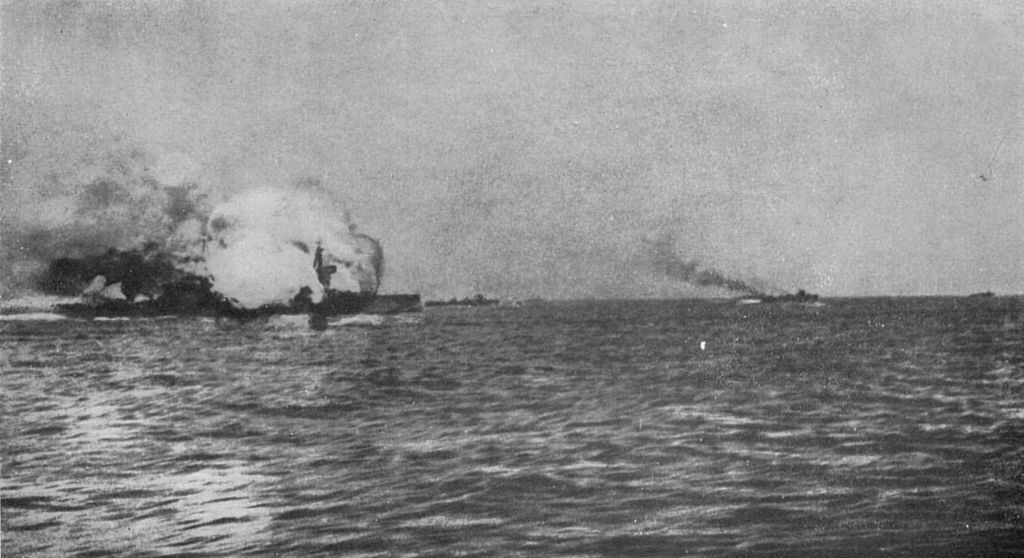
The Battle of Jutland: Naval clash in WWI, British maintain control over North Sea.
Germany
Military
4 min read
Updated By: History Editorial Network (HEN)
Published:
Updated:
The Battle of Jutland took place during World War I, involving the British Royal Navy's Grand Fleet and the Imperial German Navy's High Seas Fleet. The primary objective for Germany was to break the British blockade and weaken the Royal Navy's dominance. The British aimed to maintain their naval superiority and contain the German fleet.
The battle commenced when both fleets encountered each other in the North Sea. The engagement saw intense fighting over two days, involving approximately 250 ships and 100,000 men. The British fleet, despite suffering significant losses, managed to inflict substantial damage on the German fleet. British casualties included the loss of 14 ships and over 6,000 men. The Germans lost 11 ships and around 2,500 men.
Though Germany claimed a tactical success based on the number of British ships sunk, the strategic outcome favored Britain. The British fleet remained in command of the North Sea, preventing Germany from achieving its goal of breaking the blockade. This naval stalemate meant that the British continued their control over maritime supply routes, significantly contributing to the overall Allied war effort.
The battle highlights the strategic importance of naval power during World War I and the brutal cost of maintaining it. Jutland showcased the heavy attrition both sides faced in trying to secure maritime dominance. Though the battle itself did not result in a decisive victory for either side, it underscored the persistent contest for naval supremacy.
#WorldWarI #NavalWarfare #BattleofJutland #NorthSea #MoofLife
Primary Reference
Battle of Jutland - Wikipedia

Explore the Life Moments of
 AI Twin