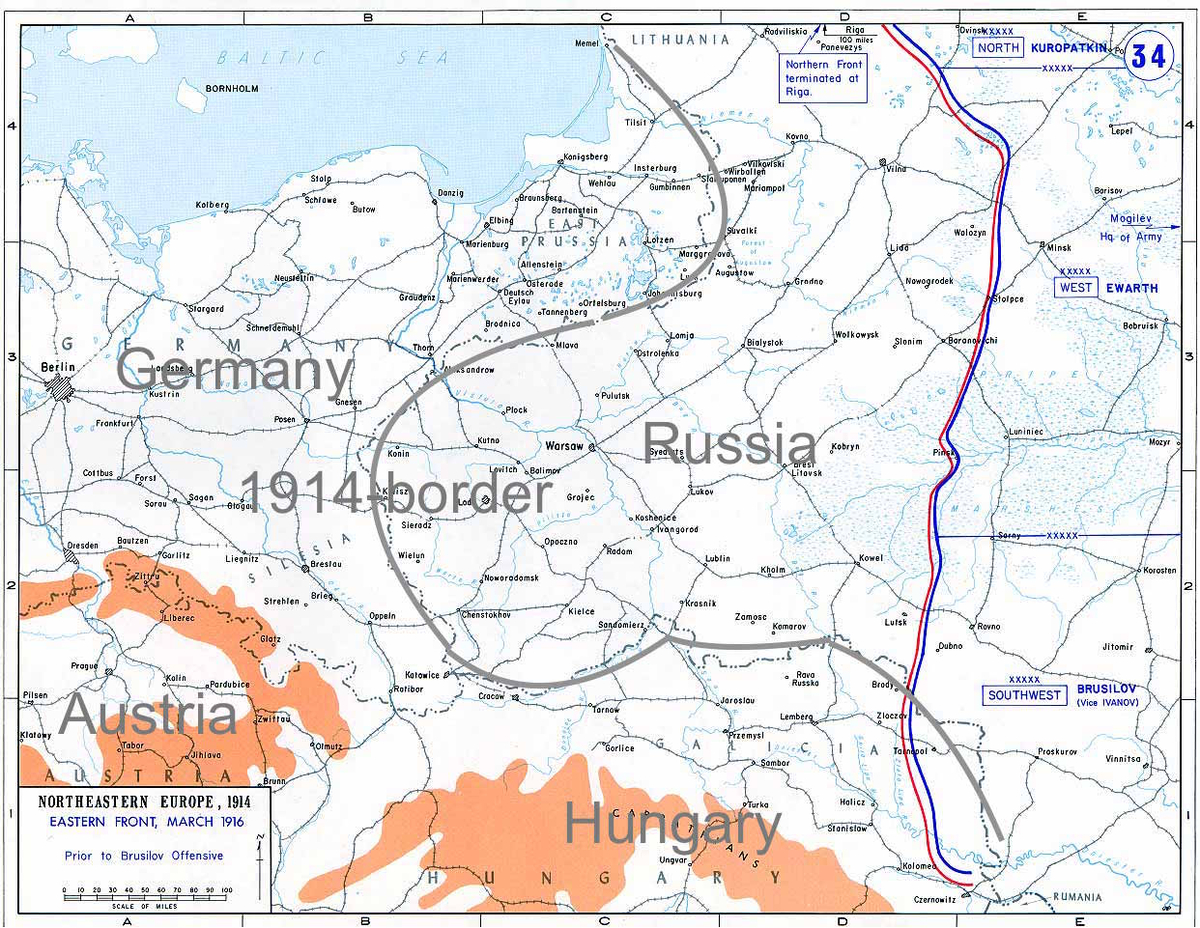
Brusilov Offensive: Russian advances weaken Austro-Hungarian forces, impacting Central Powers' war effort in WWI.
Germany
Political
Military
4 min read
Updated By: History Editorial Network (HEN)
Published:
The Brusilov Offensive, a pivotal series of attacks launched by the Russian Empire, saw sustained advancements against Austro-Hungarian forces on the Eastern Front. Initiated by General Aleksei Brusilov, the offensive aimed to relieve pressure on the Allies on the Western Front and to disrupt the Austro-Hungarian military structure. The Russian strategy included innovative tactics such as brief, intense artillery bombardments and the use of shock troops to exploit weaknesses in enemy lines.
During the offensive, Russian forces gained significant territory and inflicted heavy losses on the Austro-Hungarian army, with estimates of up to 1.5 million casualties, including killed, wounded, and captured soldiers. These successes gravely weakened the Austro-Hungarian military's combat effectiveness and morale. The Central Powers, particularly Germany, were compelled to redirect troops from the Western Front to bolster their beleaguered ally, effectively reducing pressure on the Allies in France and Belgium.
The strain on the Central Powers caused by the Brusilov Offensive had wide-reaching implications. It highlighted the vulnerability of the Austro-Hungarian forces, contributed to the eventual weakening of the Central Powers' overall war effort, and showcased the potential of coordinated, multi-front attacks. The necessity for Germany to reinforce the Eastern Front ultimately demonstrated the interconnected nature of battlefronts during World War I, influencing subsequent military strategies and decisions.
#WWI #BrusilovOffensive #EasternFront #CentralPowers #MilitaryStrategy #MoofLife

Explore the Life Moments of
 AI Twin