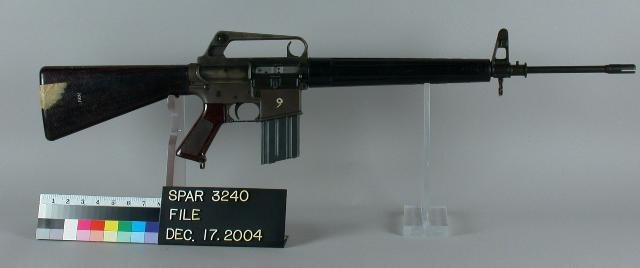
The official use of M16 rifles during the Vietnam War
4 min read
Updated By: History Editorial Network (HEN)
Published:
The official use of M16 rifles during the Vietnam War marked a transformative moment in U.S. military small arms history. Initially developed by Eugene Stoner and first known as the Armalite AR-15, the rifle was later adopted by the U.S. military as the M16. The weapon's entry into combat began in the early 1960s, with the U.S. Air Force adopting it first, followed by wider deployment to Army and Marine Corps units. By 1965, the M16 became the standard issue rifle for American troops in Vietnam, replacing the heavier M14. Its lightweight design, high rate of fire, and use of smaller 5.56mm rounds gave soldiers increased mobility and the ability to carry more ammunition—a significant tactical advantage in the dense jungles and fast-paced skirmishes typical of Vietnam.
However, the early deployment of the M16 was fraught with problems. The rifle was issued without proper cleaning kits, and it was mistakenly advertised as “self-cleaning,” which led to widespread jamming and reliability issues. These malfunctions had dire consequences on the battlefield, sparking controversy and prompting immediate design improvements. The introduction of the M16A1, featuring a chrome-plated chamber and bore, along with training and cleaning tools, gradually restored the rifle's reputation. Despite its rocky start, the M16 evolved into one of the most iconic and enduring weapons in modern military history, with its variants still in use today across the world.
\#MomentsOfLife #MoofLife\_Moment #MoofLife #M16 #VietnamWar #MilitaryHistory #SmallArms #USArmy

Explore the Life Moments of
 AI Twin