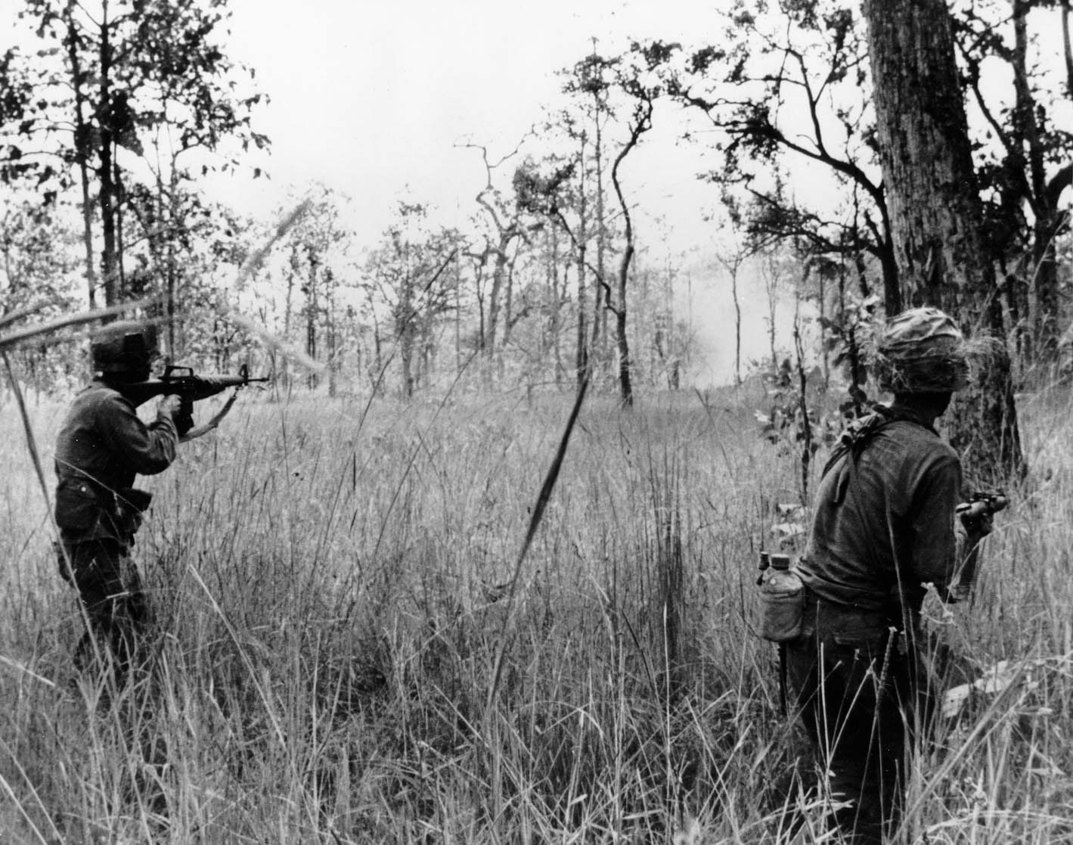
US Troops Ordered Offensive Combat Operations
Vietnam
Political
Military
4 min read
Updated By: History Editorial Network (HEN)
Published:
In June 1965, amid escalating tensions in Vietnam, US troops received orders to shift their strategy from defensive to offensive operations. This marked a significant departure from their previous role in the conflict, where they primarily supported South Vietnamese forces in repelling attacks from the Viet Cong insurgents. The decision to engage in offensive combat reflected a more proactive approach by the US military in combating the spread of communism in Southeast Asia.
As a result of this directive, US troops began conducting aggressive combat missions, launching airstrikes, search and destroy operations, and large-scale ground offensives against Viet Cong strongholds. This shift in strategy led to a significant increase in American military presence and engagement in Vietnam, with the number of troops deployed reaching unprecedented levels.
The new offensive tactics employed by US forces had a profound impact on the course of the war. While intended to weaken the Viet Cong's grip on the region and bolster the South Vietnamese government, the escalation of hostilities resulted in a higher number of casualties on both sides and fueled anti-war sentiments back in the United States. The shift to offensive operations also intensified the devastation wrought upon Vietnamese civilians, contributing to the widespread destruction and displacement experienced throughout the conflict.
Overall, the decision to order US troops to fight offensively in Vietnam marked a turning point in the conflict, with far-reaching consequences for all parties involved. It fundamentally altered the nature of the US military's involvement in the war and set the stage for a prolonged and contentious period of conflict in Southeast Asia.
#VietnamWar #USMilitary #OffensiveStrategies

Explore the Life Moments of
 AI Twin