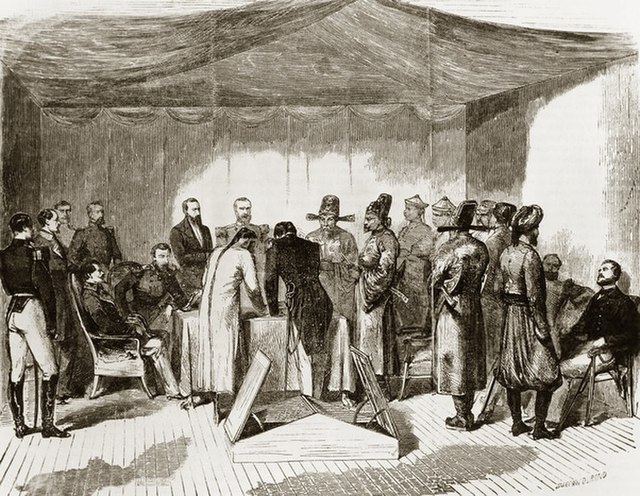
Treaty of Saigon: French Control in Cochinchina
Vietnam
Political
4 min read
Updated By: History Editorial Network (HEN)
Published:
The signing of the Treaty of Saigon solidified French dominance over Cochinchina. With this treaty, France expanded its control over Southern Vietnam, exerting authority over its administration, economy, and resources. The agreement was a culmination of French military victories and diplomatic efforts to establish a strong foothold in the region.
Prior to the treaty, France had been gradually encroaching on Vietnamese territories, engaging in conflicts to assert superiority. The signing of the treaty marked a turning point in the colonial aspirations of France in Southeast Asia. It paved the way for further colonization of Vietnam, leading eventually to the establishment of French Indochina.
The impact of the Treaty of Saigon was profound and far-reaching. It marked the beginning of a period of intense colonization and exploitation of Vietnam by the French. The local population faced oppression and marginalization as the colonial power sought to extract resources and impose their cultural and political influence. The treaty also led to significant changes in the social and economic fabric of Cochinchina, disrupting traditional ways of life and creating new power dynamics.
Overall, the signing of the Treaty of Saigon was a crucial moment in the history of Vietnam, shaping its future trajectory under colonial rule. It laid the foundation for a complex and tumultuous relationship between Vietnam and France, marked by resistance, conflict, and eventual independence struggles.
#TreatyOfSaigon #FrenchColonization #Cochinchina #VietnamHistory #ColonialImpact

Explore the Life Moments of
 AI Twin