Establishment of Huế as Capital City
Vietnam
Cultural Heritage
4 min read
Updated By: History Editorial Network (HEN)
Published:
After years of unrest and civil war, the Nguyen dynasty succeeded in unifying Vietnam under their rule. To solidify their control, Emperor Gia Long decided to establish a new capital city in Huế, a strategic location that symbolized the harmonious blending of North and South.
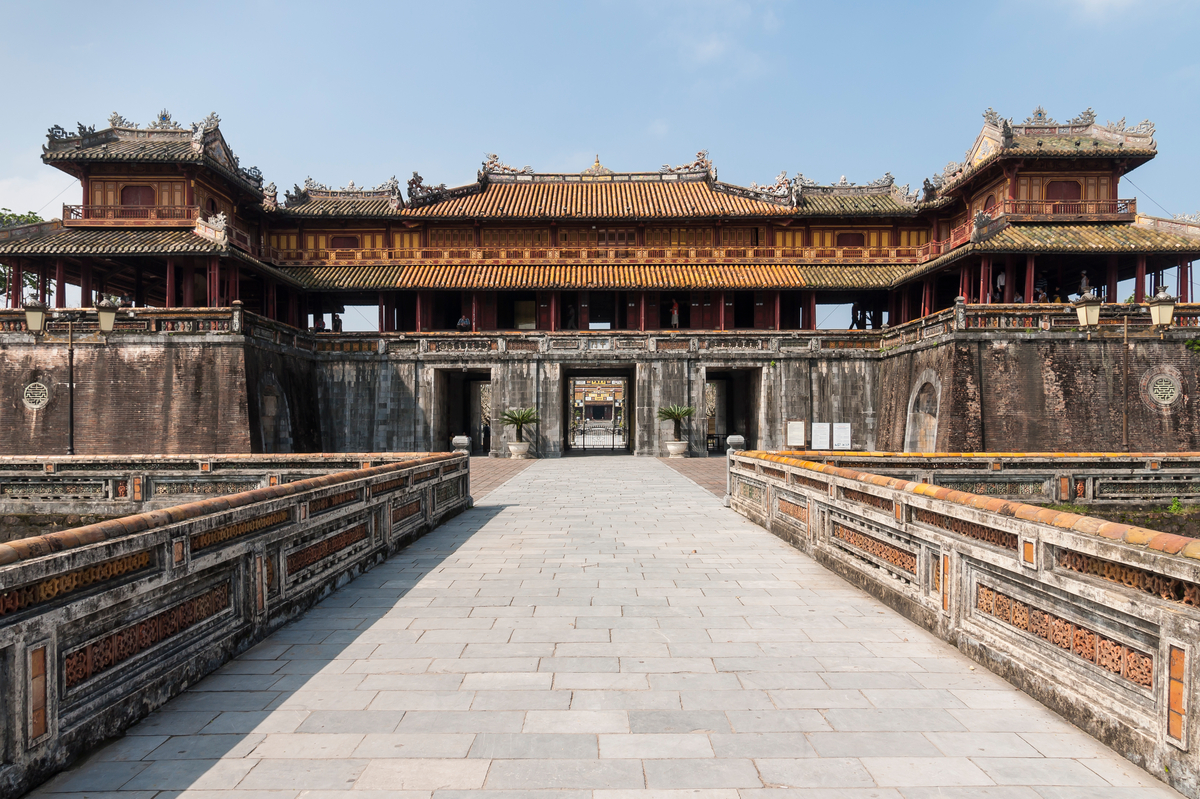
The establishment of Huế as the capital marked a new era for Vietnam. The city's location along the Perfume River, surrounded by mountains and lush landscapes, not only provided a natural defense but also embodied the Confucian principles of balance and harmony. The construction of the Imperial City, with its walls and gates, majestic palaces, and gardens, reflected the Nguyen dynasty's legitimacy and power.
Huế became the political, cultural, and religious center of Vietnam. The Imperial City housed the emperor's court, government offices, and ceremonial spaces, while the surrounding countryside bustled with activity, trade, and artisans. The city's architecture, art, literature, and rituals showcased the fusion of Vietnamese traditions with Chinese influence.
The establishment of Huế brought about significant changes in Vietnamese society. The emperor implemented administrative reforms, promoted education, and patronized the arts. The royal court attracted scholars, poets, and artists, leading to the flourishing of Confucian scholarship, poetry, and painting. The city became a symbol of national identity and unity, drawing people from all corners of Vietnam.
#HuếCapital #NguyenDynasty #VietnameseHistory #CulturalHeritage

Explore the Life Moments of
 AI Twin