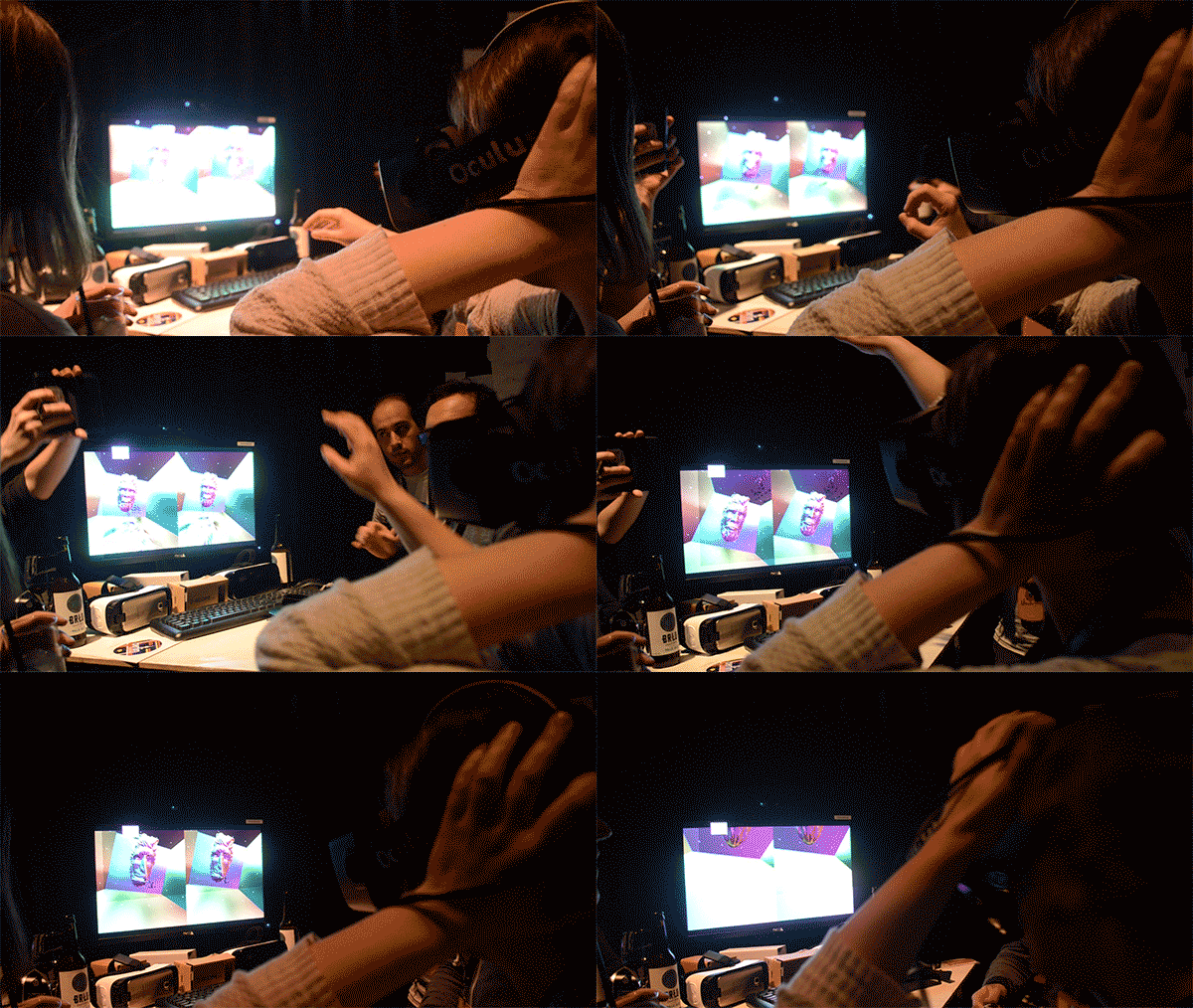
Oculus Rift Demonstrated at Trade Shows
Virtual Reality
Technology
Gaming
4 min read
Updated By: History Editorial Network (HEN)
Published:
Updated:
The Oculus Rift, a virtual reality headset developed by Palmer Luckey, was first demonstrated at various trade shows, capturing significant attention from both the public and industry professionals. This innovative technology showcased the potential of immersive virtual reality experiences, allowing users to engage with digital environments in a way that had not been previously possible. The demonstrations highlighted the headset's capabilities, including its advanced motion tracking and high-resolution display, which contributed to a growing interest in virtual reality as a viable platform for gaming and other applications. The positive reception at these events played a crucial role in establishing Oculus as a leader in the VR market, ultimately leading to its acquisition by Facebook for $2 billion. This acquisition underscored the increasing importance of virtual reality technology in the broader tech landscape and signaled a shift in focus towards social and interactive experiences in virtual environments.
Following the Oculus Rift's initial demonstrations, the virtual reality market began to expand rapidly. Competitors such as Valve and HTC entered the scene with the HTC Vive, while Sony introduced the PlayStation VR, further validating the demand for VR technology. The success of the Oculus Rift and its subsequent acquisition by Facebook not only influenced the development of new VR hardware but also encouraged investment in VR content creation. This shift has led to a diverse range of applications beyond gaming, including education, training simulations, and virtual social interactions. The impact of the Oculus Rift's demonstrations at trade shows has been profound, paving the way for advancements in virtual reality and establishing a foundation for future innovations in the field.
#mooflife
#MomentOfLife
#OculusRift
#VirtualReality
#FacebookAcquisition
#VrTechnology
#GamingIndustry

Explore the Life Moments of
 AI Twin