Montreal Protocol: Global Effort to Protect Ozone Layer through Regulation and Reduction.
United States of America
Environmental Protection
5 min read
Updated By: History Editorial Network (HEN)
Published:
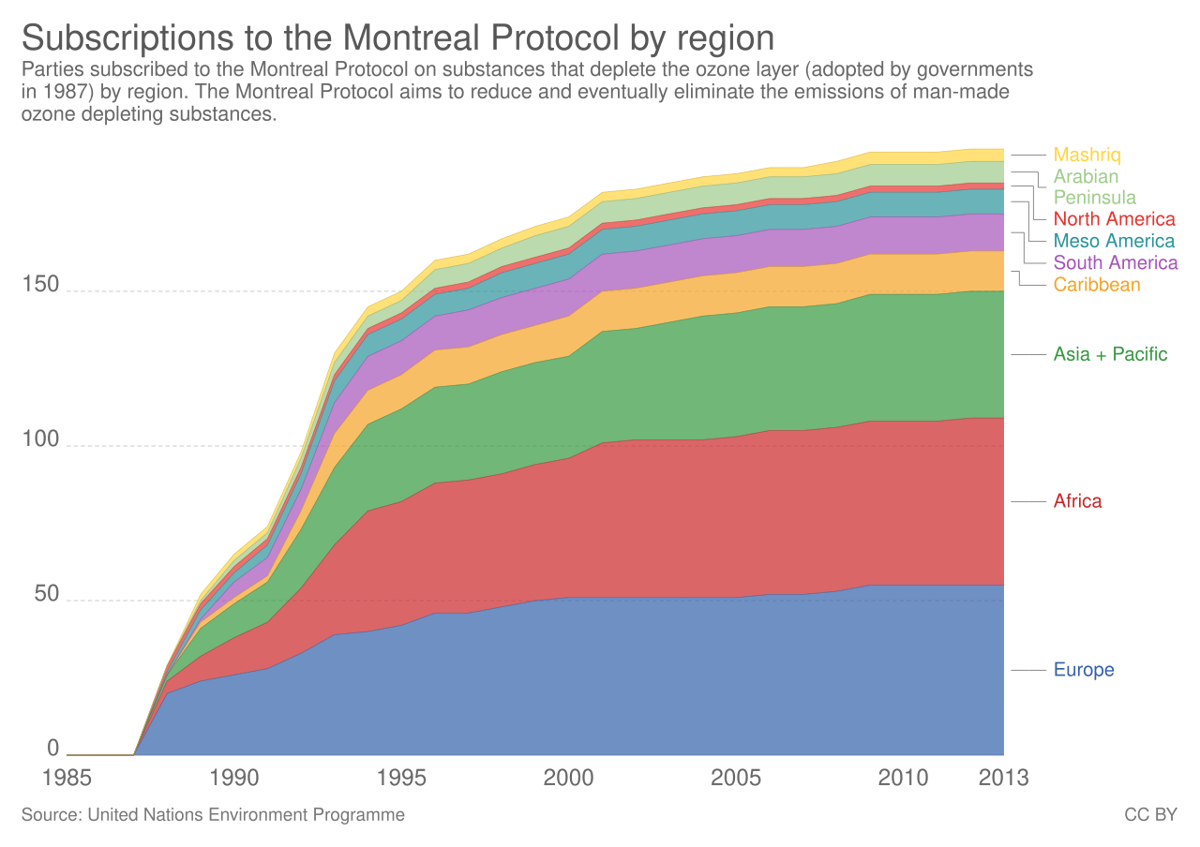
In a decisive move to protect the atmosphere, representatives from 46 countries came together to endorse the Montreal Protocol on Substances that Deplete the Ozone Layer. This international treaty aimed to regulate and phase out the production and consumption of chemicals known to harm the ozone layer, including chlorofluorocarbons (CFCs) and halons. The decision was driven by mounting scientific evidence linking these chemicals to ozone depletion, which heightened risks of skin cancer and cataracts due to increased ultraviolet radiation reaching the Earth's surface.
The treaty's framework was designed to curtail the use of ozone-depleting substances through a step-by-step reduction strategy. It set binding obligations for developed nations to reduce and eventually eliminate the use of CFCs and halons, while providing technical and financial assistance to developing countries to support their transition to safer alternatives. The Protocol established a Multilateral Fund to aid these nations, marking a significant step toward global cooperation in environmental protection.
The initial success of the treaty can be attributed to its flexibility and adaptive nature. As new scientific data emerged, the Protocol was strengthened through amendments and adjustments, including the London, Copenhagen, and Kigali amendments. These updates expanded the list of controlled substances and introduced measures to address hydrofluorocarbons (HFCs), potent greenhouse gases contributing to climate change.
Over the years, the Montreal Protocol has demonstrated notable achievements. According to the United Nations Environment Programme (UNEP), the treaty has led to a nearly 99% reduction in the production and consumption of ozone-depleting substances. Consequently, the ozone layer has shown signs of recovery, with projections suggesting a return to pre-1980 levels by the mid-21st century. Additionally, the Protocol indirectly contributed to climate change mitigation by reducing emissions of greenhouse gases.
The Montreal Protocol is often cited as a model for international environmental agreements, illustrating the potential for global collaboration in addressing pressing ecological issues. It underscores the importance of sound science, adaptive policy frameworks, and equitable assistance to achieve sustainable outcomes.
#OzoneProtection #GlobalAgreement #EnvironmentalSuccess #UNInitiatives #MoofLife
Explore the Life Moments of
 AI Twin