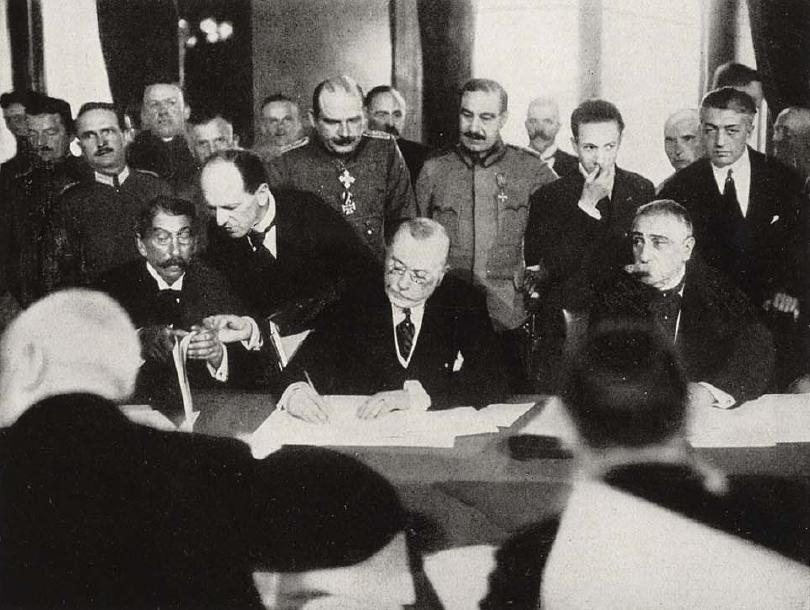
Treaty of Bucharest Ends Russo-Turkish War
Turkey

Political
Global Trade
4 min read
Updated By: History Editorial Network (HEN)
Published:
The Treaty of Bucharest was signed between the Ottoman Empire and Russia following the Russo-Turkish War of 1806–1812. The conflict had been sparked by Russian expansionist ambitions in the region and the Ottoman Empire's desire to maintain its territorial integrity. The war had seen significant upheaval in the region, with battles raging across various fronts.
As the war progressed, both sides suffered heavy casualties and financial strain. The signing of the Treaty of Bucharest brought an end to hostilities and aimed to restore peace between the two powers. The treaty saw the Ottoman Empire ceding parts of its territory, including Bessarabia, to Russia. In return, Russia agreed to return some territories to the Ottomans and pay a substantial war indemnity.
The signing of the treaty had lasting implications for the balance of power in the region. It solidified Russia's position as a dominant force in Eastern Europe and weakened the Ottoman Empire's control over its territories. The loss of Bessarabia was a significant blow to the Ottomans and marked a shift in the regional dynamics.
Despite the treaty's attempt to bring about peace, tensions between the Ottoman Empire and Russia would continue to simmer in the years to come. The repercussions of the Treaty of Bucharest would be felt in the region for decades, shaping diplomatic relations and territorial disputes.
The signing of the Treaty of Bucharest was a pivotal moment in the history of the Ottoman Empire and Russia, marking the end of a bloody conflict and setting the stage for future power struggles in the region. The legacy of this treaty continues to influence geopolitical dynamics in Eastern Europe and the Middle East to this day.
#TreatyofBucharest #RussoTurkishWar #OttomanEmpire #Russia #Geopolitics

Explore the Life Moments of
 AI Twin