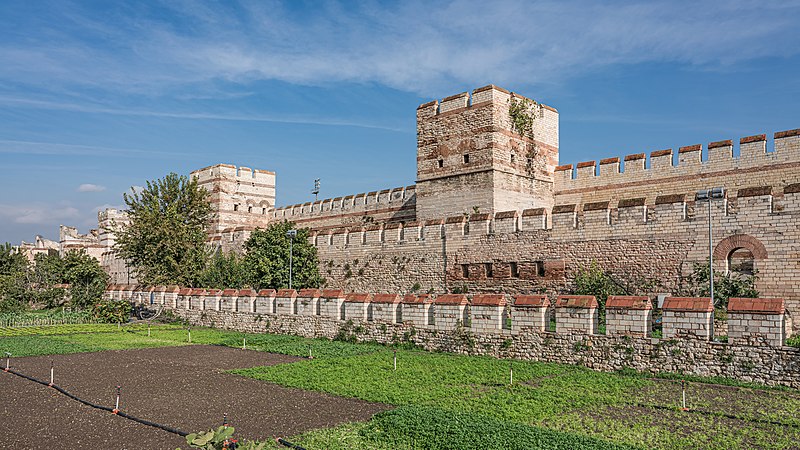
Emperor Theodosius II's Theodosian Walls of Constantinople
Turkey

Engineering
3 min read
Updated By: History Editorial Network (HEN)
Published:
Emperor Theodosius II of the Byzantine Empire ordered the construction of the Theodosian Walls around the city of Constantinople as a defensive measure against external threats. These massive defensive fortifications stretched over six kilometers and were strategically built to protect the capital from potential invasions.
The walls consisted of a double line of ramparts, with a moat and 96 towers, providing a formidable defense system. They were further reinforced with gates, battlements, and military outposts, making it nearly impenetrable. Theodosius II's foresight in fortifying the city helped to safeguard Constantinople from numerous sieges and attacks over the centuries.
The construction of the Theodosian Walls had a significant impact on the defense of Constantinople, turning the city into a stronghold that withstood attacks from various foes, including Attila the Hun and the Avars. The walls played a crucial role in preserving the Byzantine Empire and its cultural heritage for generations to come.
Today, the remnants of the Theodosian Walls stand as a testament to the engineering prowess of the Byzantine Empire and the strategic vision of Emperor Theodosius II. Visitors to modern-day Istanbul can still marvel at these ancient fortifications, which have stood the test of time and continue to intrigue historians and tourists alike.
#TheodosianWalls #Constantinople #ByzantineEmpire #Defense #Engineering #Istanbul

Explore the Life Moments of
 AI Twin