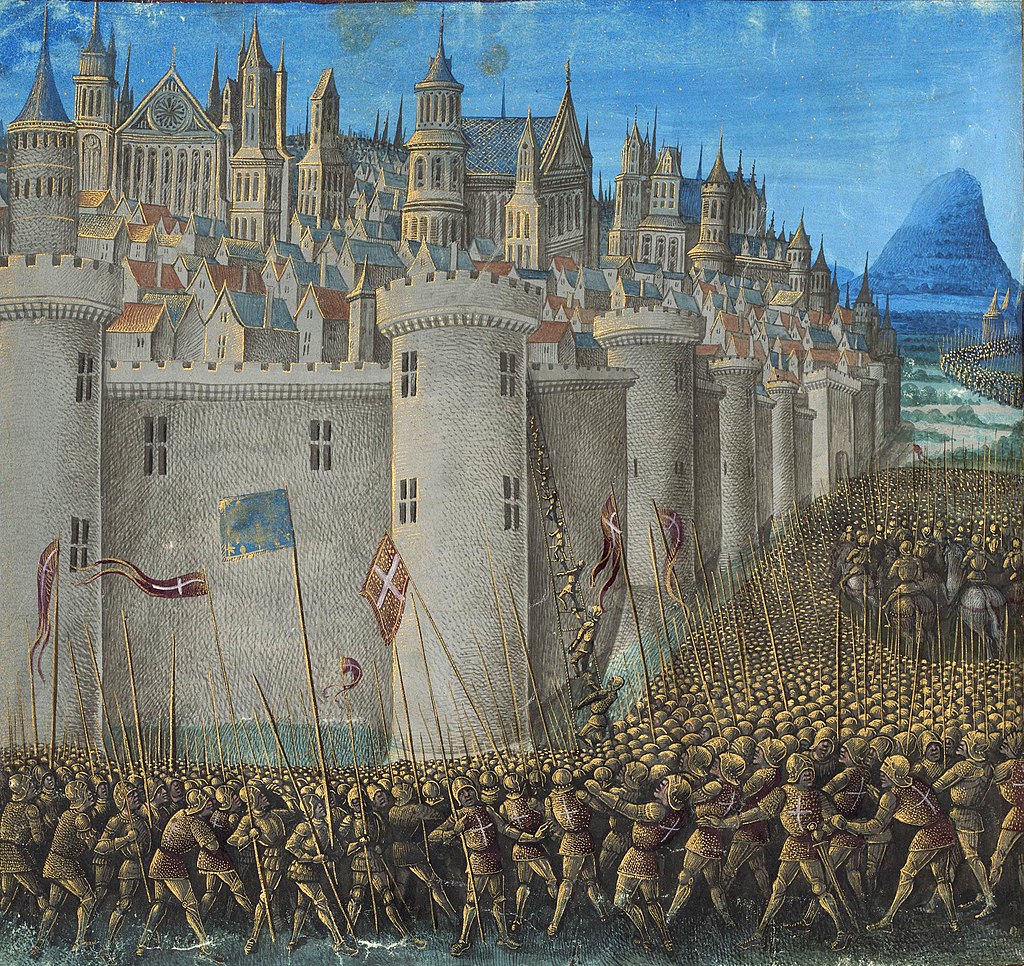
Rûm Sultanate captures Antioch in Meander Siege.
Turkey

Political
Global Trade
4 min read
Updated By: History Editorial Network (HEN)
Published:
In the early 13th century, the Siege of Antioch on the Meander unfolded, marking a crucial episode in the power struggle between the Seljuk Sultanate of Rûm and the Empire of Nicaea. Strategically positioned in western Anatolia, Antioch on the Meander served as a significant outpost due to its proximity to key trade routes.
The Seljuk Sultanate of Rûm, led by Sultan Kayqubad I, sought to expand its influence and control over the region. In a calculated military campaign, Sultan Kayqubad I's forces besieged Antioch on the Meander, aiming to weaken the Empire of Nicaea's grip on the area. The city's fortifications were put to the test as the Seljuk forces relentlessly pressed on.
Ultimately, after a protracted siege, the Seljuk Sultanate of Rûm emerged victorious, capturing Antioch on the Meander from the Empire of Nicaea. The conquest reshaped the regional power dynamics, solidifying the Seljuk Sultanate of Rûm's dominance in western Anatolia while dealing a significant blow to the Empire of Nicaea's territorial holdings.
The aftermath of the Siege of Antioch on the Meander reverberated throughout the region, influencing trade, politics, and military strategies. The Seljuk Sultanate of Rûm's control over the city bolstered its position as a formidable regional power, while the Empire of Nicaea faced the repercussions of losing a key stronghold.
The Siege of Antioch on the Meander underscored the fierce competition between the Seljuk Sultanate of Rûm and the Empire of Nicaea for supremacy in Anatolia, highlighting the volatile nature of medieval power dynamics.
#SeljukSultanate #EmpireofNicaea #AnatolianHistory #MedievalSiege

Explore the Life Moments of
 AI Twin