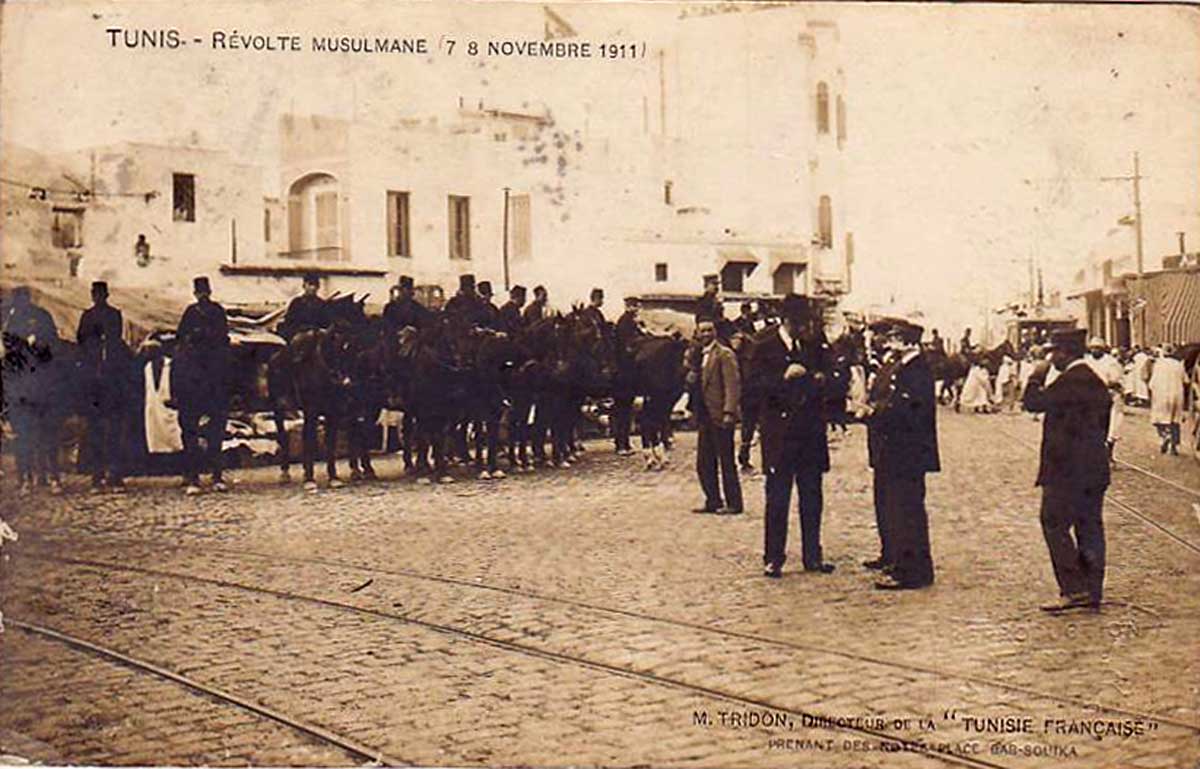
The publication of the petition signed by 50,000 Tunisians demanding reforms and Tunisian representation in the government, known as the "Petition of the Tunisian People"
Tunisia
7 min read
Updated By: History Editorial Network (HEN)
Published:
In 1911, Tunisia was under French colonial rule, having been a French protectorate since 1881. The colonial administration implemented policies that often marginalized the local population, leading to growing discontent among Tunisians. This discontent culminated in a significant event in 1911 known as the "Petition of the Tunisian People."
The petition was a remarkable demonstration of collective action and political consciousness among Tunisians. It was signed by 50,000 Tunisians, a considerable number considering the population and the political climate of the time. The petitioners demanded several key reforms and greater representation for Tunisians in the government. The main points of the petition included:
Political Representation: Tunisians sought more substantial representation in the government, particularly in the Grand Council, which was dominated by French officials and settlers. They wanted elected representatives who could voice the concerns and interests of the local population.
Legal Reforms: The petition called for reforms in the legal system, which was heavily biased in favor of the French. Tunisians faced discrimination and lacked fair legal recourse under the colonial judicial system.
Economic and Social Reforms: The signatories also demanded improvements in economic conditions, including better access to education and healthcare, and reforms to address land ownership issues that disadvantaged many Tunisians.
Cultural Recognition: There was a call for the preservation and promotion of Tunisian culture and identity, which were under threat due to the colonial policies that favored French culture and language.
The submission of the petition was a bold move that demonstrated the growing national consciousness among Tunisians. It highlighted their dissatisfaction with the colonial administration and their desire for greater autonomy and participation in their own governance. The petition was significant not only for its content but also for the way it was organized and presented. Gathering 50,000 signatures in an era without modern communication tools was a testament to the determination and unity of the Tunisian people.
However, the French authorities largely dismissed the petition, underestimating the depth of the discontent it represented. The failure of the colonial administration to address the demands articulated in the petition led to further frustration and unrest among Tunisians. This discontent contributed to a series of events that would eventually culminate in Tunisia's independence movement in the mid-20th century.
The "Petition of the Tunisian People" of 1911 is remembered as a significant milestone in Tunisia's struggle for self-determination and political rights. It marked one of the earliest organized efforts to challenge colonial rule and seek reforms through collective action. The legacy of this petition can be seen in the subsequent movements and uprisings that eventually led to Tunisia's independence from French rule in 1956.
This historical moment is a powerful example of the importance of political activism and collective action in the face of oppressive regimes. It underscores the enduring human desire for representation, justice, and cultural recognition.
#MomentsOfLife #MoofLife_Moment #MoofLife #Tunisia #ColonialHistory #PoliticalActivism #TunisianIndependence

Explore the Life Moments of
 AI Twin