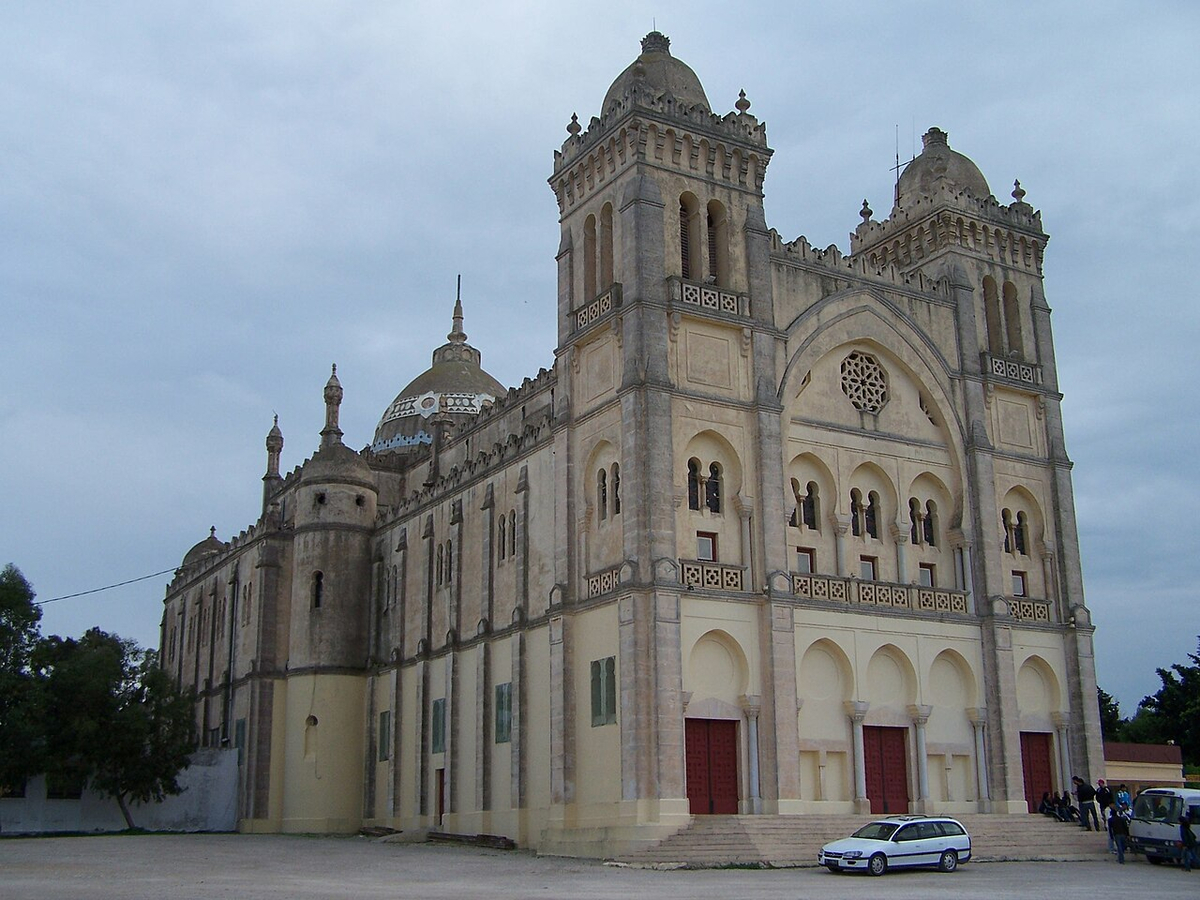
The construction of the Cathedral of St. Louis in Carthage's historical significance.
Tunisia
Architecture
3 min read
Updated By: History Editorial Network (HEN)
Published:
The construction of the Cathedral of St. Louis in Carthage began in the 1840s. The cathedral was designed by the French architect Louis-Charles-Auguste-Henri Normand and was funded by the French government. Its construction aimed to serve the French Catholic community residing in Carthage at the time.
The Cathedral of St. Louis became a prominent landmark in Carthage, showcasing neo-Byzantine architecture with its characteristic domes and arches. Upon its completion, the cathedral served as a center for Catholic religious activities and ceremonies in the region. It also played a significant role in the cultural and architectural heritage of Carthage.
The cathedral's construction marked a period of French colonial influence in Tunisia, particularly in the realm of religion and architecture. It stood as a symbol of French presence in the region and served as a hub for the French Catholic community to gather and practice their faith.
With its intricate design and historical significance, the Cathedral of St. Louis in Carthage remains a cherished site for both locals and visitors, attracting individuals interested in its architectural beauty and historical importance.
#CathedralofStLouis #Carthage #FrenchColonialArchitecture #TunisianHistory
Primary Reference
Monuments, Memories, and Conversion: Commemorating Saint ...

Explore the Life Moments of
 AI Twin