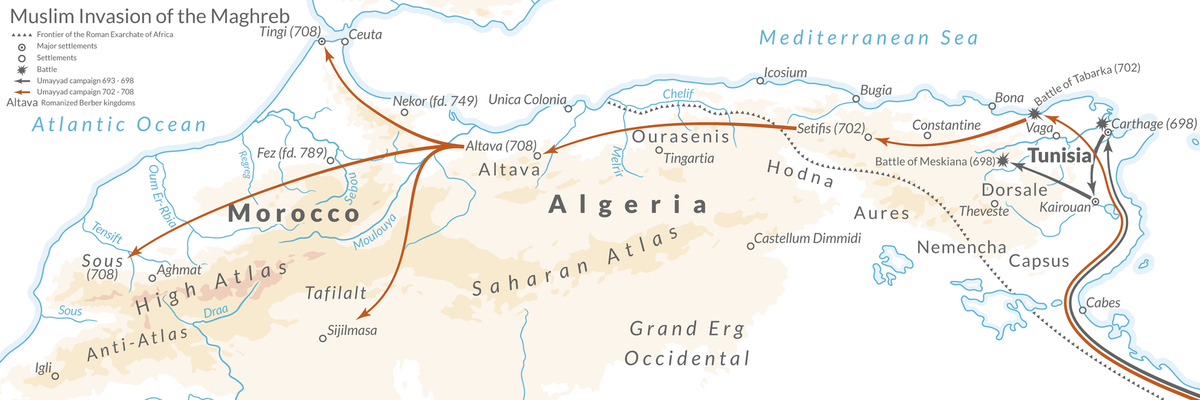
Beginning of Arab conquest in Tunisia changes region's history with lasting impact on culture.
Tunisia

Cultural
3 min read
Updated By: History Editorial Network (HEN)
Published:
The Arab conquest of Tunisia began as the Islamic forces, led by the general Abdullah ibn Saad, arrived in North Africa to expand the territories under Muslim rule. The campaign aimed to spread Islam and establish political dominance in the region. The Byzantine-controlled areas of Carthage and Tripoli were key targets due to their strategic locations.
The conquest of Tunisia had a profound impact on the region, introducing Arab culture, language, and religion. It led to the Arabization and Islamization of the indigenous Berber population, shaping the future identity of Tunisia. The establishment of Islamic governance brought about changes in administration, law, and society, influencing the development of the region for centuries to come.
This event marked the beginning of a new era in Tunisia, as Arab rule replaced Byzantine control. It paved the way for the integration of North Africa into the wider Islamic world, fostering trade, intellectual exchange, and cultural diffusion. The Arab conquest of Tunisia laid the foundation for the rich tapestry of history and heritage in the region, shaping its identity as a crossroads of civilizations.
#ArabConquest #TunisiaHistory #IslamicExpansion
Primary Reference
Autocratization Changing Nature ?

Explore the Life Moments of
 AI Twin