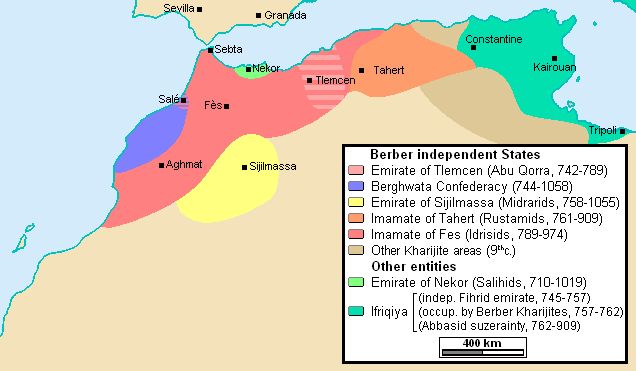
Berber uprising leads to the creation of Rustamid Emirate in Tunisia, challenging Arab rulers.
Tunisia

Political
Cultural
3 min read
Updated By: History Editorial Network (HEN)
Published:
The Berber Revolt against the Arab rulers in North Africa intensified, particularly in Tunisia, leading to the establishment of the independent Rustamid Emirate. The Berbers, feeling marginalized and oppressed by the ruling Arab elite, rallied under the leadership of the Rustamid dynasty. This revolt gained momentum as more Berber tribes joined forces to break free from Arab domination.
The Rustamids successfully established their independent emirate in Tunisia, with their capital in Tahert. This new emirate sought to create a society based on Berber traditions and customs, effectively pushing back against Arab cultural influence. The Rustamid Emirate became a sanctuary for Berber identity and autonomy in the region.
The establishment of the Rustamid Emirate marked a significant shift in the power dynamics of North Africa, challenging the dominance of Arab rule. It also highlighted the deep-seated tensions between the Arab and Berber communities in the region. The emirate's independence provided a sense of pride and empowerment to the Berber people, fostering a renewed sense of cultural identity and self-governance.
The Berber Revolt and the emergence of the Rustamid Emirate underscore the complexities of North African history and the enduring struggle for sovereignty and self-determination. #BerberRevolt #RustamidEmirate #TunisiaHistory #CulturalAutonomy

Explore the Life Moments of
 AI Twin