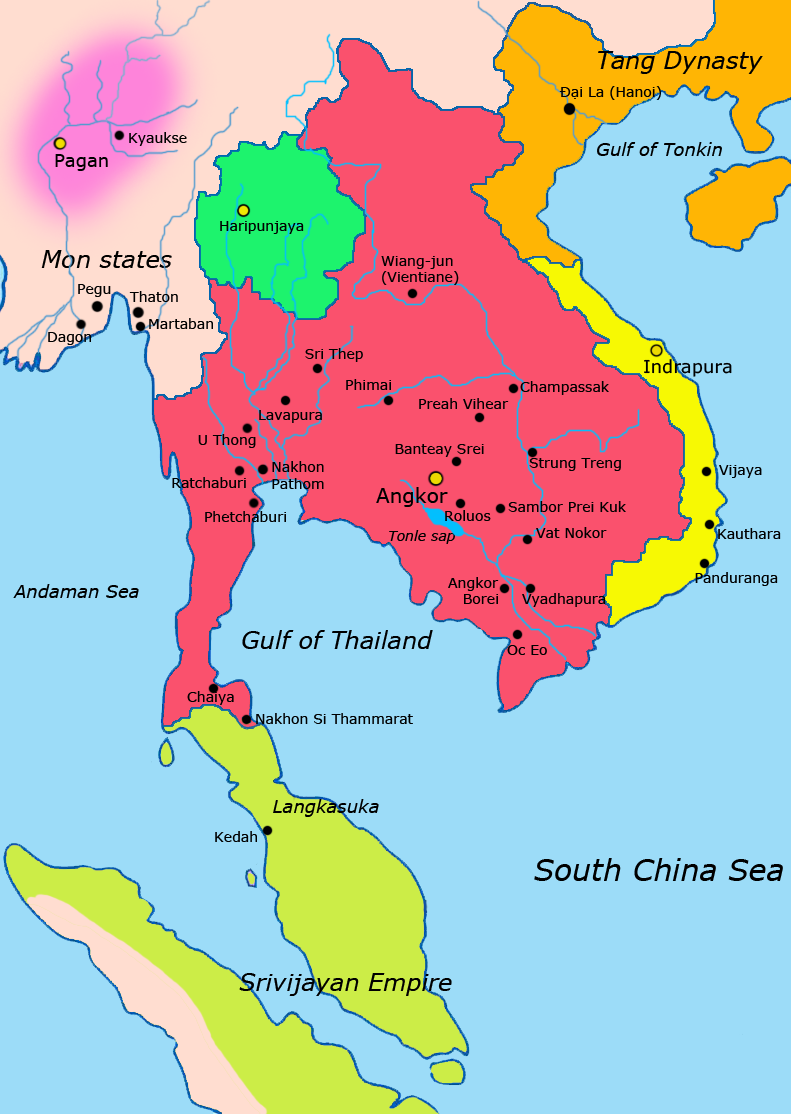
Formation of the Khmer Empire in Southeast Asia.
Thailand
CulturalHeritage
4 min read
Updated By: History Editorial Network (HEN)
Published:
During the 9th century, the Khmer Empire was established in Southeast Asia, encompassing present-day Cambodia and parts of modern-day Thailand. This significant expansion marked a pivotal moment in the region's history. The Khmer Empire, with its capital at Angkor, flourished under strong leadership and a centralized political system.
The empire's rise to power was fueled by its strategic location, abundant resources, and advanced agricultural techniques. The Khmer rulers implemented sophisticated irrigation systems that allowed for surplus food production, enabling the empire to support a large population and build impressive infrastructure such as temples, reservoirs, and roads.
The establishment of the Khmer Empire had a lasting impact on the political, cultural, and architectural landscape of Southeast Asia. The empire's influence spread far and wide, shaping the customs, beliefs, and traditions of the region. The construction of iconic temples like Angkor Wat and Bayon stand as enduring symbols of the empire's grandeur and architectural prowess.
The Khmer Empire's dominance in the region was solidified through military conquests, trade networks, and diplomatic alliances. Its reach extended into present-day Thailand, where the Khmer influence can still be seen in the art, language, and customs of the local population.
The legacy of the Khmer Empire continues to resonate in Thailand and Cambodia today, as evidenced by the shared cultural heritage and historical ties between the two countries. The establishment of the Khmer Empire laid the foundation for the development of Southeast Asian civilization and remains a defining chapter in the history of the region.
#KhmerEmpire #SoutheastAsia #CulturalHeritage #Angkor #HistoricalLegacy #Thailand

Explore the Life Moments of
 AI Twin