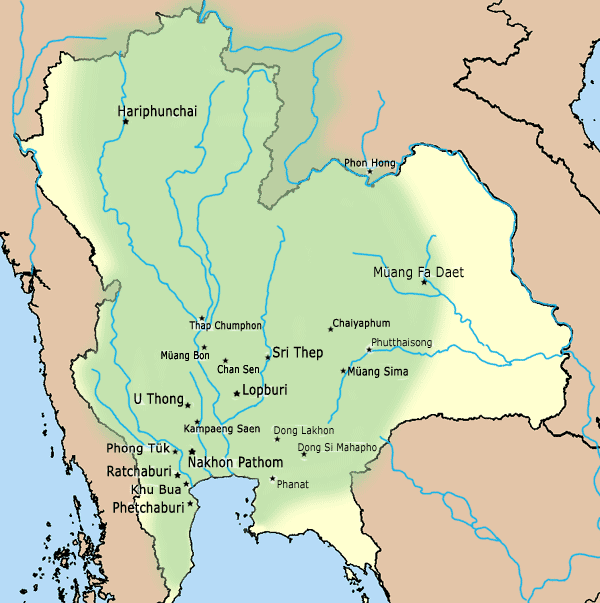
Early Dvaravati Kingdom Formation.
Thailand
Cultural Heritage
4 min read
Updated By: History Editorial Network (HEN)
Published:
In the 9th century, the Dvaravati Kingdom was established in central Thailand. This marked a pivotal moment in the region's history, as it laid the foundation for a prosperous civilization that would thrive for centuries to come. The kingdom was influenced by Indian culture and religion, particularly Buddhism, which played a significant role in shaping the societal norms and values of the Dvaravati people.
The establishment of the Dvaravati Kingdom had a lasting impact on the political and cultural landscape of central Thailand. It brought about a period of economic growth and artistic flourishing, as evidenced by the impressive sculptures and architectural achievements of the time. The kingdom's strategic location also enabled it to flourish as a center of trade, attracting merchants from far and wide.
Furthermore, the Dvaravati Kingdom was characterized by its sophisticated urban planning and advanced irrigation systems, which enabled efficient agricultural production and sustained the population. This allowed for the growth of cities and the development of a complex social hierarchy.
Over time, the Dvaravati Kingdom faced challenges from neighboring powers, ultimately leading to its decline. However, the legacy of the kingdom lived on through its contributions to Thai culture and history. Its artistic achievements, architectural innovations, and religious practices continued to influence the region long after its demise.
Today, the remnants of the Dvaravati Kingdom serve as a reminder of the rich heritage of central Thailand and the enduring impact of its early settlers. The cultural legacy of the kingdom continues to be celebrated and preserved, providing valuable insights into the history of the region and its people.
#DvaravatiKingdom #ThailandHistory #CulturalHeritage

Explore the Life Moments of
 AI Twin