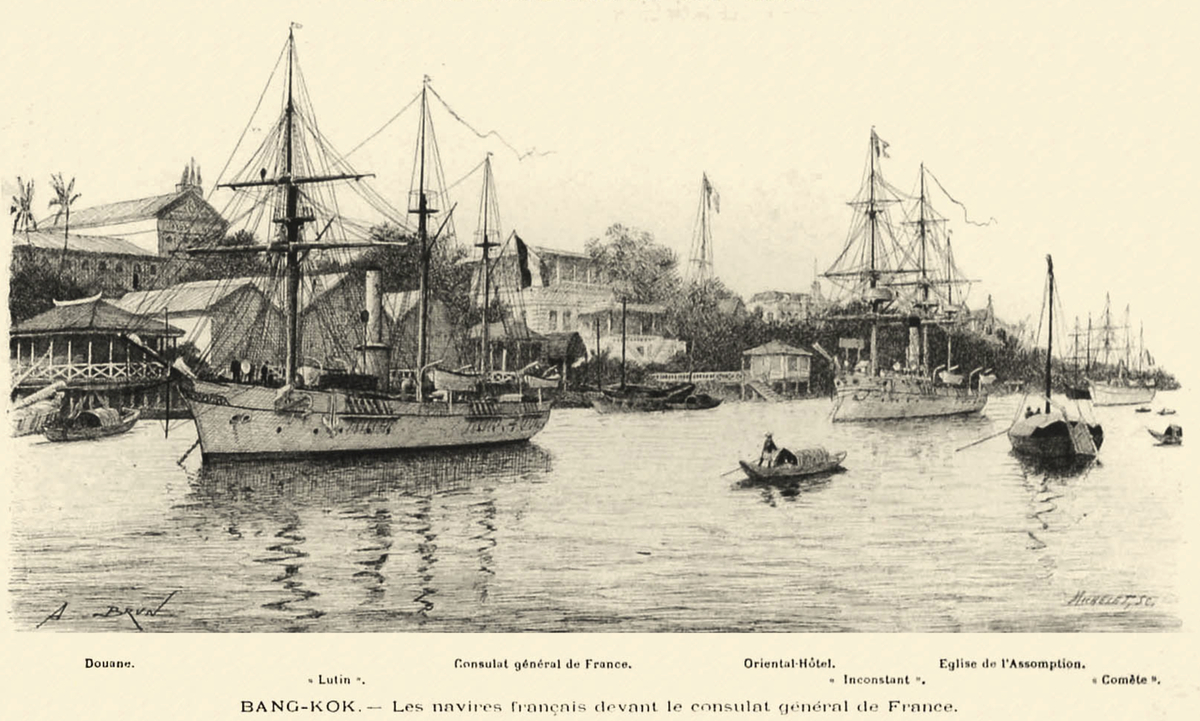
Naval Battle: Siam vs. French Warships
Thailand
Political
Global Trade
4 min read
Updated By: History Editorial Network (HEN)
Published:
The Battle of Paknam was a significant naval engagement between the French and Siamese forces near Paknam on the Chao Phraya River. The conflict arose due to French imperial ambitions in Southeast Asia, particularly in Indochina. Seeking to expand their influence, the French sent warships to blockade the Siamese port of Paknam, demanding the withdrawal of Siamese troops from the disputed territories of Laos and Cambodia.
The Siamese, under the leadership of King Chulalongkorn, refused to comply with the French ultimatum, leading to a confrontation between the two sides. Despite being outnumbered and outgunned, the Siamese put up a fierce resistance, utilizing both modern and traditional war tactics. The French, however, with their superior firepower and technology, ultimately emerged victorious in the battle.
The outcome of the Battle of Paknam had far-reaching consequences for Siam. The Siamese were compelled to cede Laos to the French and make territorial concessions in Cambodia, marking the beginning of Siam's territorial decline. The loss also highlighted the pressing need for modernization and reform within the Siamese military and government.
The Battle of Paknam underscored the challenges faced by traditional kingdoms in the face of European imperialism and the importance of adapting to the changing geopolitical landscape. It served as a stark reminder of the power dynamics at play in Southeast Asia during the late 19th century.
Overall, the Battle of Paknam was a pivotal moment in Thailand's history, shaping its relationship with European colonial powers and prompting internal reforms to safeguard its sovereignty. It stands as a testament to the complex interactions between tradition and modernity in the face of external threats.
#BattleofPaknam #FrenchColonialism #SiameseResistance #GeopoliticalShifts #ImperialAmbitions

Explore the Life Moments of
 AI Twin