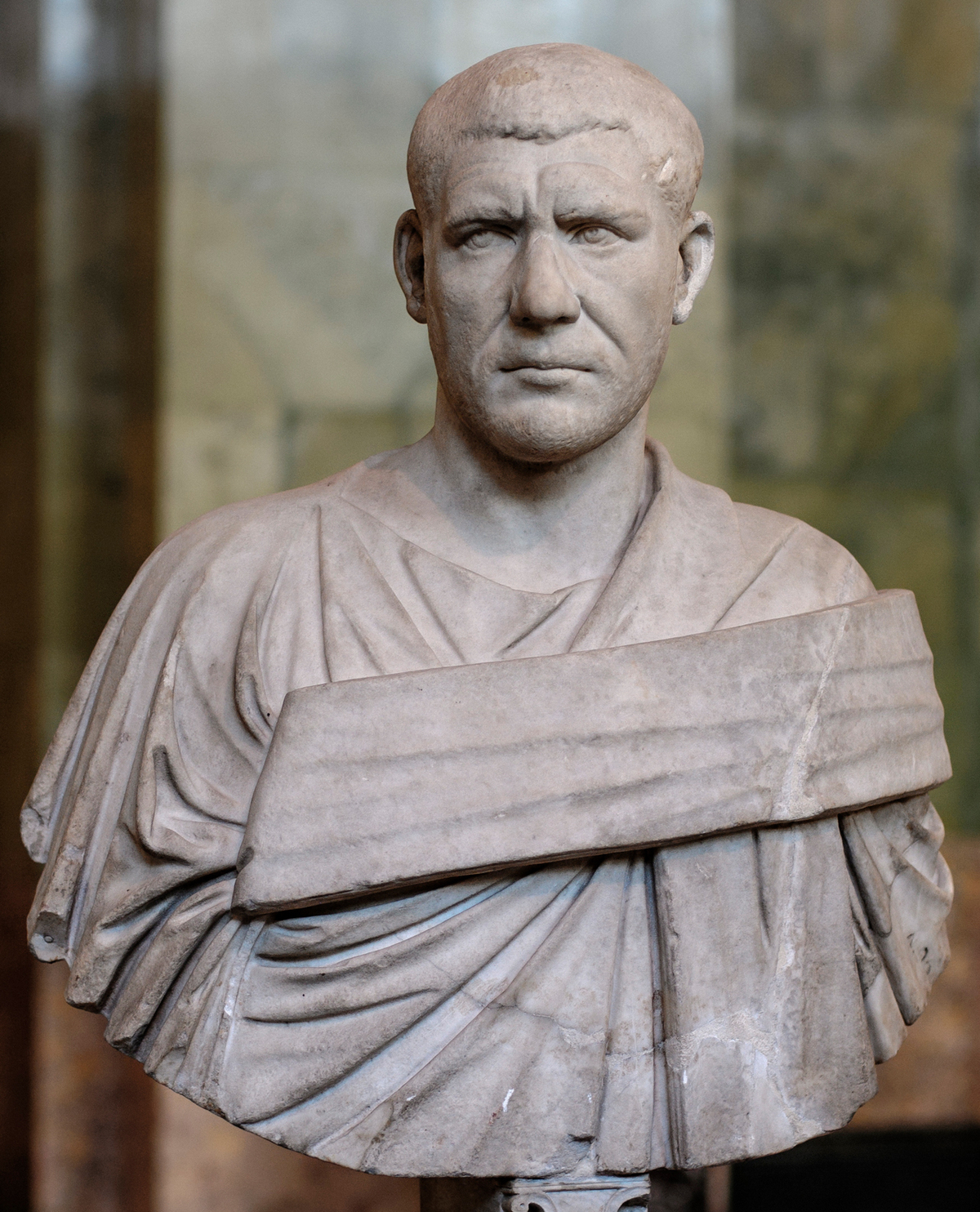
Roman Emperor Philip the Arab Reigns Over Roman Empire From Shahba Birthplace
Syria
Political
4 min read
Updated By: History Editorial Network (HEN)
Published:
Philip the Arab, originally named Marcus Julius Philippus, hailed from the town of Shahba in what is now Syria. His rise to power marked a significant episode in the history of the Roman Empire. Philip's ascendancy occurred amidst a turbulent period characterized by political instability and frequent changes in leadership.
Philip's journey to the throne began with his military career, serving under Emperor Gordian III. The circumstances leading to Philip's rule were catalyzed by the Persian campaign, where Gordian met an untimely death. Philip, who had climbed the ranks to become Praetorian Prefect, assumed control following Gordian's demise. He negotiated a peace treaty with the Persian ruler Shapur I, signaling a strategic withdrawal and stabilizing the eastern borders of the empire.
One of Philip's notable decisions as emperor was to celebrate the millennium of Rome, an event marked by grand games and public festivities. These celebrations were designed to bolster the legitimacy of his rule and unify the Roman populace. Furthermore, Philip's reign saw efforts to address economic challenges, including coinage reforms aimed at stabilizing the currency.
Philip is also remembered for his approach to religious policies. While he maintained the traditional Roman religious structure, some sources suggest he harbored sympathies towards Christianity, although concrete evidence remains sparse.
Philip's reign came to an end after a brief period of relative stability. A rebellion led by Decius, a prominent military commander, resulted in Philip's defeat and death in a battle near Verona. Despite his short tenure, Philip's efforts to maintain peace and his connection to Syria highlight the diverse cultural fabric of the Roman Empire.
#MoofLife #RomanHistory #SyrianLegacy #RomanEmpire #PhilipTheArab #HistoricalLeadership
Primary Reference
Ivory/data/vocab/vocab.ar-en.en at master · lintool/Ivory · GitHub

Explore the Life Moments of
 AI Twin