Establishment of Fatimid Control in Egypt and Sudan
Sudan

Political
Cultural Integration
5 min read
Updated By: History Editorial Network (HEN)
Published:
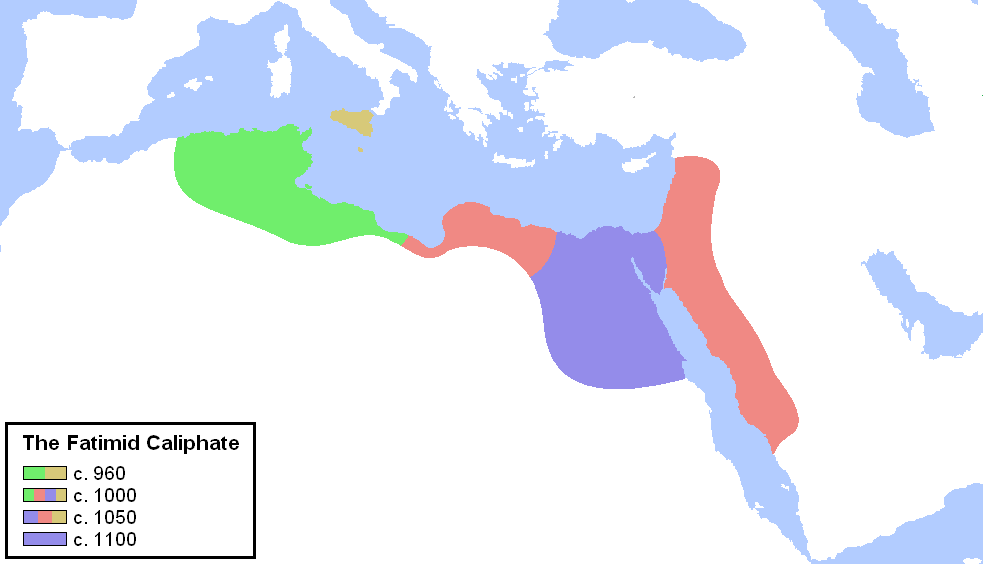
The Fatimid conquest of Egypt marked a significant shift in the political landscape of North Africa and the eastern Mediterranean region. Originating from Ifriqiya, the Fatimid dynasty set its sights on Egypt, the seat of substantial economic and strategic importance due to its fertile lands and control over key trade routes. Their success in capturing Egypt opened new opportunities for expansion, leading to their consolidation of power and subsequent influence over neighboring territories, including Sudan.
The Fatimid caliphate, rooted in an Ismaili Shia ideology, sought to expand its influence and propagate its religious doctrine. Following the conquest of Egypt, the establishment of Cairo as the capital symbolized not only a political but also a cultural and religious transformation. The Fatimid expansion did not stop there; the rulers extended their influence southward towards Sudan. Sudan became entwined in the broader political and economic circuits of the Fatimid empire.
The impact of Fatimid rule manifested through several dimensions. Economically, integration into the Fatimid domain facilitated trade between Sudan and other parts of the empire, enriching local markets. Administratively, the region saw the imposition of Fatimid governance practices, which included taxation and law enforcement aligned with their systems. Militarily, the Fatimid rulers bolstered their southern borders, establishing garrisons to secure their newly acquired territories.
Furthermore, the spread of Ismaili Shia Islam as a state-sponsored religion began to permeate Sudanese society. Though the long-term religious impacts were nuanced with interplay from indigenous beliefs and existing practices, the Fatimids initiated significant religious and cultural exchanges.
The Fatimid caliphate's control over Egypt and its expansion into Sudan thus marked a period of increased interaction between northern and northeastern Africa. This expansion facilitated economic interconnectivity, administrative integration, and cultural diffusion across the regions, further embedding Sudan into the web of an emerging Islamic world dominated by the Fatimid influence.
#FatimidConquest #PoliticalChange #IslamicExpansion #CulturalIntegration #SudanHistory #MoofLife

Explore the Life Moments of
 AI Twin