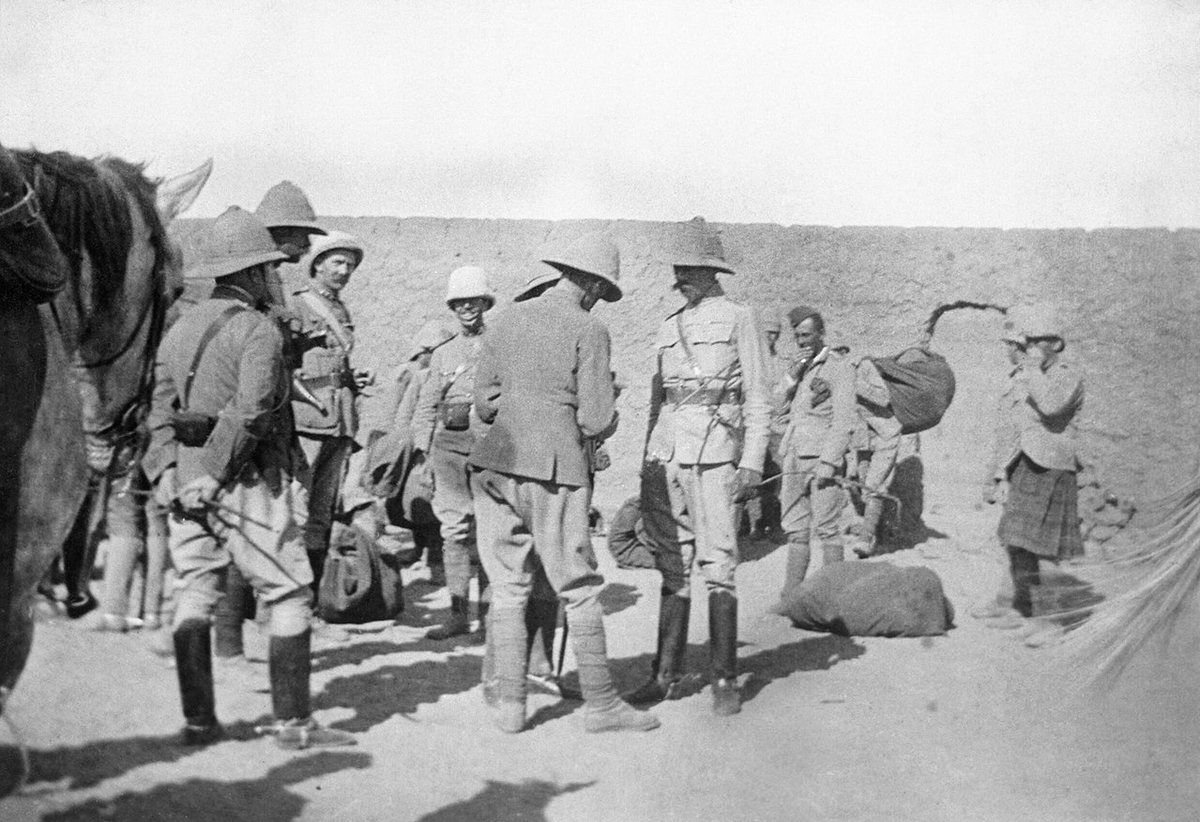
British Invasion in Sudan
Sudan

PoliticalShift
5 min read
Updated By: History Editorial Network (HEN)
Published:
The arrival of British forces in Sudan marked a pivotal moment in the region's colonial history. The Sudan region had experienced a period of turmoil and instability due to the Mahdist revolt, a religious and nationalistic uprising against the Egyptian administration. The British involvement began as part of a broader strategy to secure their interests in the Nile Valley, which was vital for controlling access to Egypt and the Suez Canal, essential for maritime trade routes to India and the Far East.
To reassert control, British forces, combined with Egyptian troops under British command, launched a military campaign. The British aimed to dismantle the Mahdist State established by Muhammad Ahmad, known as the Mahdi. The campaign was part of the Anglo-Egyptian efforts to restore dominion over Sudan, which had fallen out of Egyptian control after the Mahdist uprising.
The British military expeditions were characterized by a well-planned strategy, having utilized superior weaponry and logistical support. The troops advanced efficiently along the course of the Nile, using railways for transport and establishing fortified supply lines. The campaigns culminated in significant battles at locations including Dongola and Omdurman, which led to the eventual defeat of the Mahdist forces.
The impact of the British arrival in Sudan was multifaceted. It resulted in the establishment of the Anglo-Egyptian Condominium, effectively placing Sudan under joint British-Egyptian rule but with significant British influence dominating the administration. This period marked the beginning of extensive modernization efforts in infrastructure, though these developments were primarily aimed at consolidating colonial control rather than benefiting the local population.
The staple economy of Sudan saw changes with increased emphasis on cash crops like cotton, fostering both economic growth and dependence on British markets. Additionally, the imposition of colonial rule brought about significant social and cultural disruption. The traditional power structures were altered, and resistance to foreign rule simmered, laying seeds for future nationalist movements.
The British forces' arrival in Sudan significantly altered the political landscape, setting the stage for the nation's future struggles for autonomy and identity.
#ColonialImpact #SudanHistory #MilitaryCampaign #AngloEgyptianRule #MahdistWar #HistoricalShift #MoofLife

Explore the Life Moments of
 AI Twin