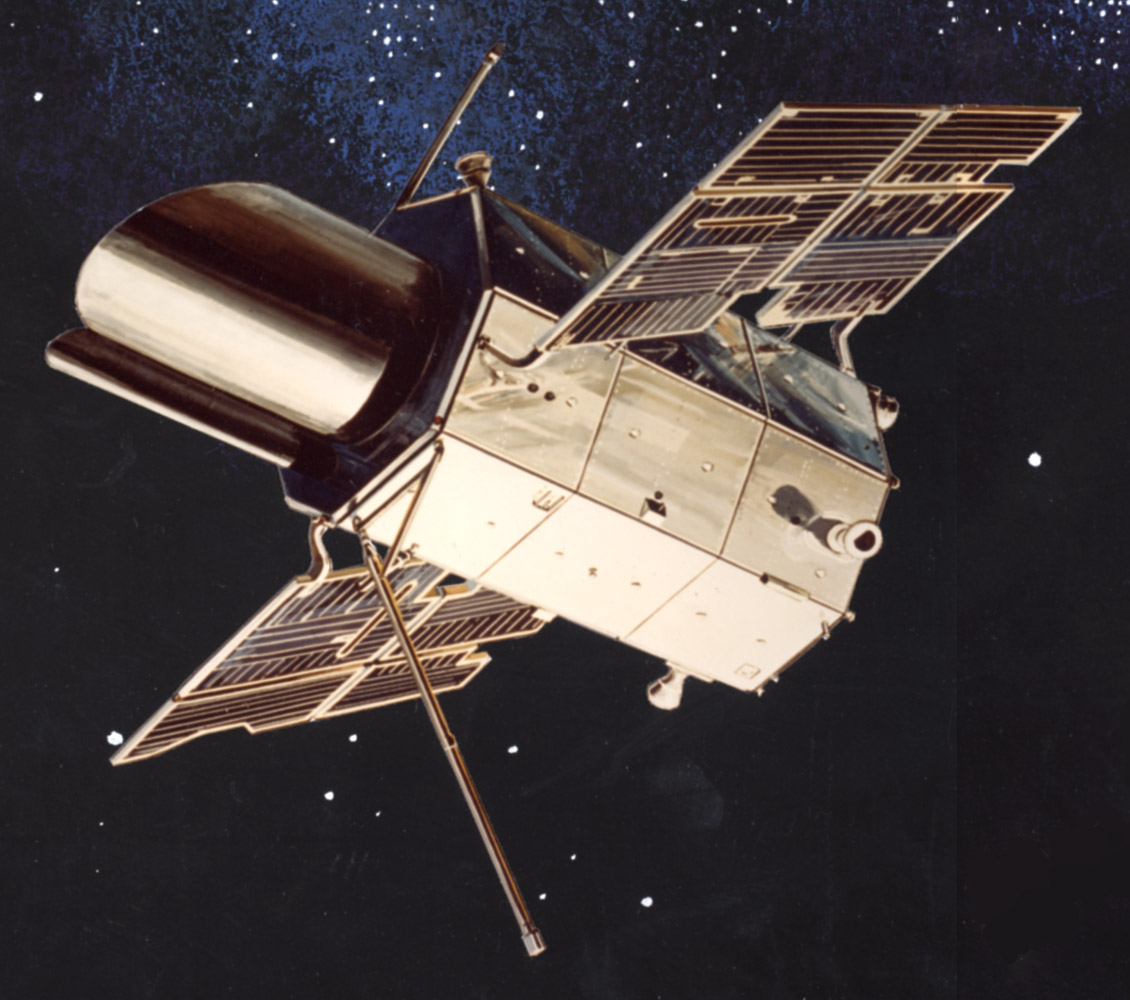
First Ultraviolet Observatory Launched by NASA
Cape Kennedy, Florida, United States
Space
NASA
Astronomy
3 min read
Updated By: History Editorial Network (HEN)
Published:
Updated:
On 07/12/1968, NASA launched the Orbiting Astronomical Observatory 2 (OAO-2), the first successful space-based ultraviolet observatory, from Cape Kennedy, Florida. The spacecraft was part of NASA’s OAO program, designed to conduct astronomical observations above Earth’s atmosphere, which absorbs most ultraviolet radiation and prevents such studies from being carried out effectively from the ground.
OAO-2 carried multiple ultraviolet telescopes and instruments built by various scientific institutions, enabling astronomers to observe stars, galaxies, and other celestial objects in ultraviolet wavelengths. The satellite operated in low Earth orbit and provided continuous observations that were not possible with short-duration rocket flights. Over its operational lifetime, OAO-2 collected extensive data on stellar atmospheres, interstellar matter, and ultraviolet emissions from distant objects.
The mission remained active until 1973, significantly exceeding expectations and producing a large volume of scientific data. OAO-2’s success established the viability of long-duration space-based observatories and contributed to the development of later missions, including more advanced space telescopes designed to study the universe across different wavelengths.
#mooflife
#MomentOfLife
#Nasa
#Oao-2
#UltravioletObservatory
#Astronomy
#SpaceExploration
Primary Reference
Orbiting Astronomical Observatory

Explore the Life Moments of
 AI Twin