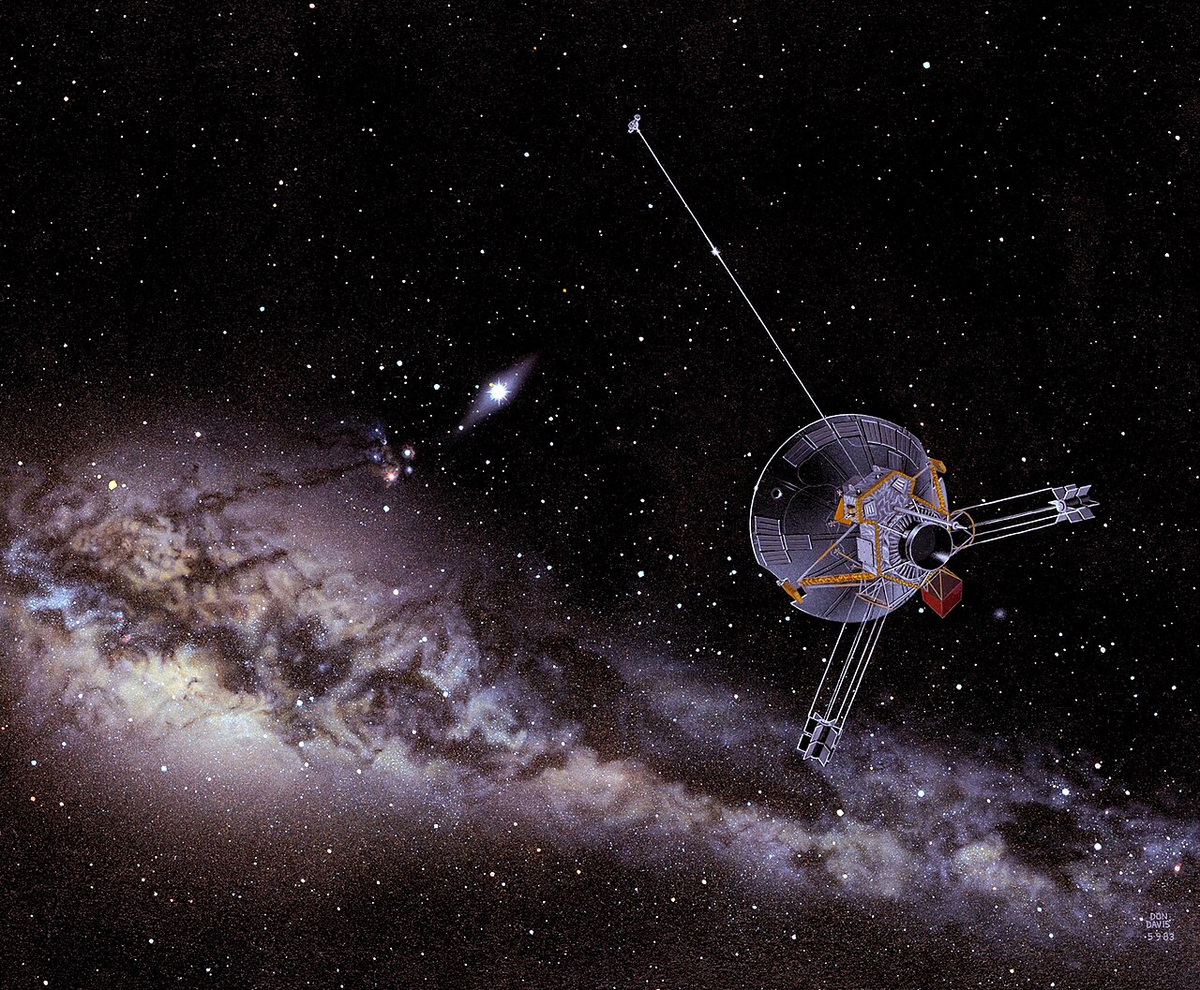
First spacecraft designed to travel on a trajectory out of the Solar System
Cape Canaveral, Florida, United States
Space Exploration
NASA Missions
Astrophysics
4 min read
Updated By: History Editorial Network (HEN)
Published:
Updated:
On 03/03/1972, NASA launched Pioneer 10, the first spacecraft specifically designed to travel beyond the outer planets and eventually into interstellar space. The launch took place from Cape Canaveral, Florida, marking the beginning of a mission that would extend human-made exploration farther than ever before.
Pioneer 10 was equipped with scientific instruments to study the solar wind, cosmic rays, and the interplanetary magnetic field. One of its primary early objectives was to pass safely through the asteroid belt, a region that had previously been considered potentially hazardous for spacecraft. The successful transit demonstrated that the belt posed less danger than feared, clearing the way for future missions to the outer Solar System.
On 03/12/1973, Pioneer 10 conducted the first close flyby of Jupiter, providing the first direct measurements of the planet’s environment, including its intense radiation belts and magnetic field. After completing its Jupiter encounter, the spacecraft continued on a trajectory that would carry it out of the Solar System. By 13/06/1983, it had crossed the orbit of Neptune, becoming the first spacecraft to move beyond the region of the major planets.
Pioneer 10 also carried a gold-anodized aluminum plaque designed by Carl Sagan and colleagues, depicting symbolic information about humanity and Earth’s location. The plaque was intended as a message for any potential extraterrestrial intelligence that might encounter the spacecraft in the distant future.
The mission remained in contact with Earth until 2003, providing decades of data about the outer reaches of the Solar System. Pioneer 10’s launch marked the beginning of humanity’s first deliberate step toward interstellar exploration.
#mooflife
#MomentOfLife
#Pioneer10
#Nasa
#SpaceExploration
#InterstellarMission
#NuclearPowerInSpace
Primary Reference
Pioneer 10

Explore the Life Moments of
 AI Twin