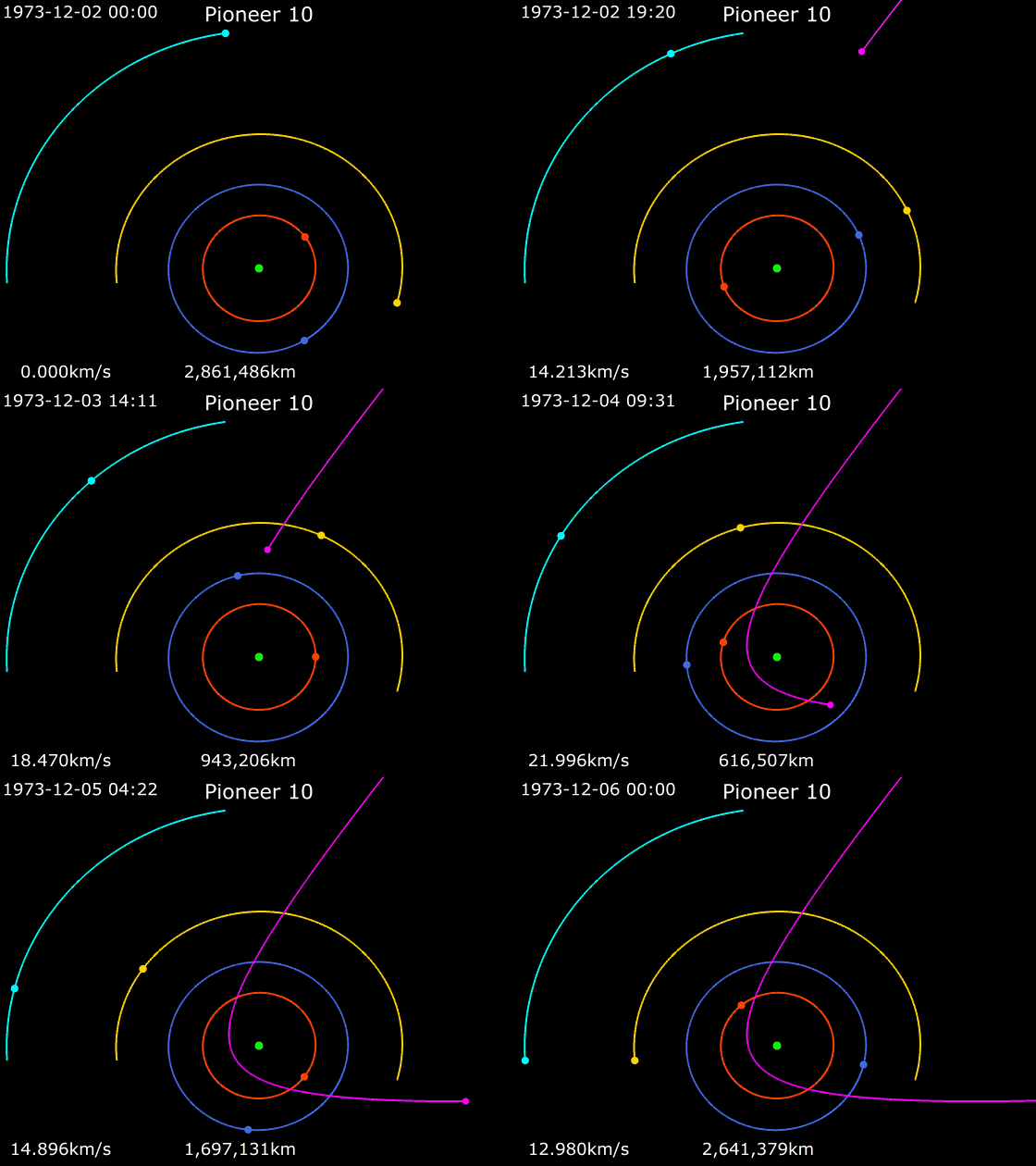
Pioneer 10's Historic Flyby of Jupiter
Jupiter flyby, outer Solar System
Space Exploration
NASA
Pioneer 10
4 min read
Updated By: History Editorial Network (HEN)
Published:
Updated:
On 03/12/1973, NASA’s Pioneer 10 spacecraft became the first human-made object to perform a close flyby of Jupiter, providing the first direct observations of the Solar System’s largest planet. Launched on 02/03/1972, the spacecraft had already achieved a major milestone by successfully passing through the asteroid belt, demonstrating that robotic probes could safely navigate this region.
During its closest approach, Pioneer 10 passed within approximately 132,000 kilometers of Jupiter’s cloud tops and transmitted valuable scientific data back to Earth. The spacecraft captured images of the planet, revealing details of its atmospheric bands and storms. It also conducted measurements of Jupiter’s powerful magnetic field and radiation belts, confirming that the environment was far more intense than previously estimated.
The mission provided critical data on the structure of Jupiter’s magnetosphere and its interaction with the solar wind. Pioneer 10 also observed Jupiter’s moons and refined estimates of the planet’s mass and size. These findings helped scientists better understand the dynamics of gas giants and prepared future missions for the challenges of operating in such extreme conditions.
One of the key achievements of the flyby was proving that spacecraft could survive the high-radiation environment surrounding Jupiter. This information was essential for the planning of later missions, including Voyager 1 and Voyager 2, which conducted more detailed studies of the planet in 1979.
#mooflife
#MomentOfLife
#Pioneer10
#JupiterFlyby
#Nasa
#SpaceExploration
#OuterSolarSystem
Primary Reference
Pioneer 10

Explore the Life Moments of
 AI Twin