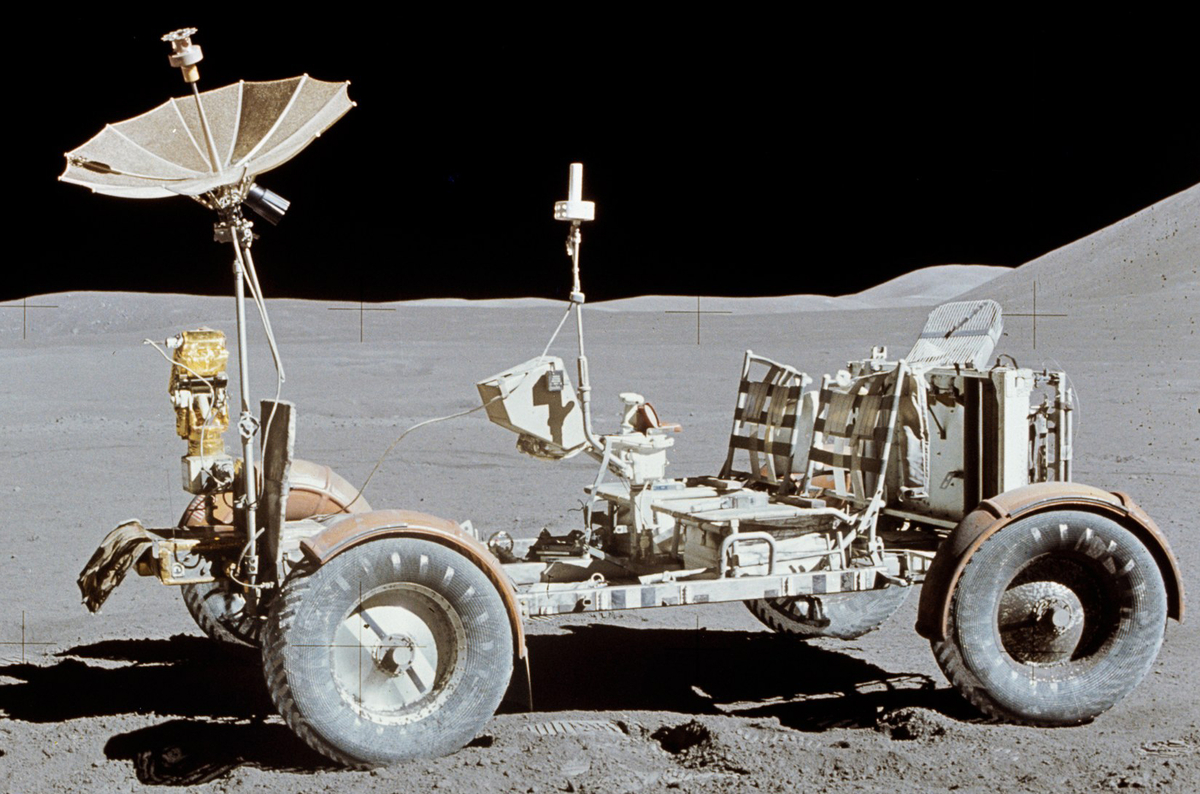
First rover on another celestial body
Mare Imbrium, Moon
Space Exploration
Robotics
Astronomy
3 min read
Updated By: History Editorial Network (HEN)
Published:
Updated:
On 17/11/1970, the Soviet Union’s Lunokhod 1 rover successfully landed on the Moon, becoming the first robotic rover to explore the surface of another celestial body. The mission was delivered by the Luna 17 spacecraft, which touched down in the Mare Imbrium region, a large lunar plain.
Lunokhod 1 was remotely operated from Earth and designed to conduct scientific experiments and surface exploration. The rover was equipped with cameras, soil analysis instruments, and sensors to measure radiation and surface properties. It traveled across the lunar terrain using eight independently powered wheels and transmitted images and data back to Earth in near real time.
Over the course of its mission, Lunokhod 1 traveled approximately 10.5 kilometers and operated for nearly 11 months, far exceeding its planned lifetime of about three months. It transmitted more than 20,000 images and performed numerous soil tests, providing detailed information about the Moon’s surface composition and mechanical properties. The rover ceased operations in October 1971 after completing its objectives.
The success of Lunokhod 1 demonstrated that robotic vehicles could effectively explore planetary surfaces over extended periods. Its design and operational methods influenced later rover missions, including those sent to Mars decades later.
#mooflife
#MomentOfLife
#Lunokhod1
#FirstRover
#MoonExploration
#SpaceExploration
#RoboticMissions
Primary Reference
Lunokhod programme

Explore the Life Moments of
 AI Twin