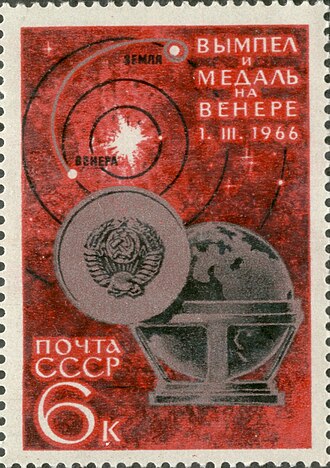
First impact into another planet
United States of America
Space Exploration
Planetary Science
History of Space Missions
4 min read
Updated By: History Editorial Network (HEN)
Published:
Updated:
The Venera 3 mission marked a pivotal achievement in space exploration as it became the first spacecraft to impact another planet, specifically Venus. Launched by the USSR, Venera 3 was part of a series of missions aimed at exploring the harsh conditions of Venus, which is known for its thick atmosphere and extreme temperatures. The spacecraft was designed to gather data about the planet's surface and atmosphere, although it was not equipped to transmit information back to Earth after the impact. This mission represented a significant step in the Soviet space program and demonstrated the capability to reach and interact with other planetary bodies, paving the way for future exploration missions. The successful impact of Venera 3 provided valuable insights into the challenges of planetary exploration, particularly regarding the engineering and technology required to withstand the hostile environments found on other planets.
The impact of Venera 3 on the field of planetary science was profound. It not only showcased the technological advancements of the time but also set a precedent for subsequent missions to Venus and other planets. Following Venera 3, the USSR continued to develop its Venera program, leading to more sophisticated missions that successfully transmitted data back to Earth. The information gathered from these missions has contributed to our understanding of Venus's geology, atmosphere, and potential for past habitability. The success of Venera 3 also inspired other space agencies, including NASA, to pursue their own planetary exploration missions, ultimately leading to a broader understanding of our solar system and the various celestial bodies within it.
#mooflife
#MomentOfLife
#Venera3
#VenusExploration
#SpaceMissions
#PlanetaryScience
#SovietSpaceProgram
Primary Reference
https://en.wikipedia.org/wiki/Venera_3

Explore the Life Moments of
 AI Twin