First human excursion beyond low Earth orbit
Kennedy Space Center to lunar orbit and Pacific Ocean splashdown
Space Exploration
NASA Missions
Human Spaceflight
3 min read
Updated By: History Editorial Network (HEN)
Published:
Updated:
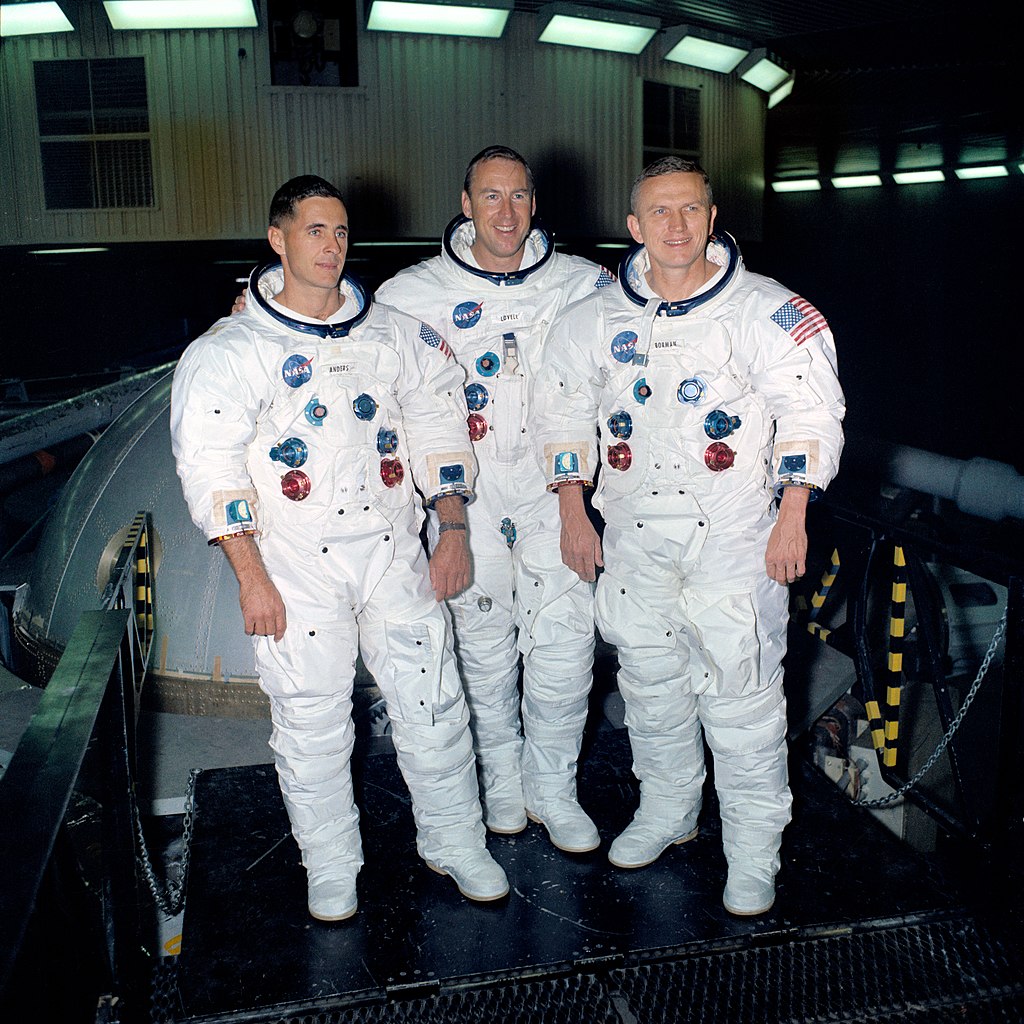
On 21/12/1968, NASA launched Apollo 8 from Kennedy Space Center, Florida, marking the first time humans traveled beyond low Earth orbit. The mission carried astronauts Frank Borman, James A. Lovell Jr., and William A. Anders aboard a Saturn V rocket. Originally planned as a test of the Lunar Module in Earth orbit, the mission profile was changed to a lunar orbit flight, making Apollo 8 the first crewed spacecraft to leave Earth’s immediate gravitational region and head toward another celestial body.
Apollo 8 entered lunar orbit on 24/12/1968, becoming the first mission to carry humans around the Moon. During ten orbits, the crew conducted observations of the lunar surface, took photographs, and gathered data for future landing missions. One of the most widely recognized moments occurred when the crew captured the “Earthrise” photograph, showing Earth rising above the Moon’s horizon. On the same day, the astronauts delivered a televised broadcast to a global audience, reading passages from the Book of Genesis while orbiting the Moon.
After completing its lunar orbit operations, Apollo 8 performed a trans-Earth injection burn to begin the return journey. The spacecraft safely reentered Earth’s atmosphere and splashed down in the Pacific Ocean on 27/12/1968. The mission demonstrated that humans could navigate to the Moon, operate in lunar orbit, and return safely, providing essential validation for the Apollo 11 lunar landing planned for the following year.
#mooflife
#MomentOfLife
#Apollo8
#Nasa
#SpaceExploration
#HumanSpaceflight
#LunarMission
Primary Reference
Apollo 8

Explore the Life Moments of
 AI Twin