First aerodynamically powered flight on another celestial body
Wright Brothers Field, Jezero Crater, Mars
Aerospace
Space Exploration
Robotics
4 min read
Updated By: History Editorial Network (HEN)
Published:
Updated:
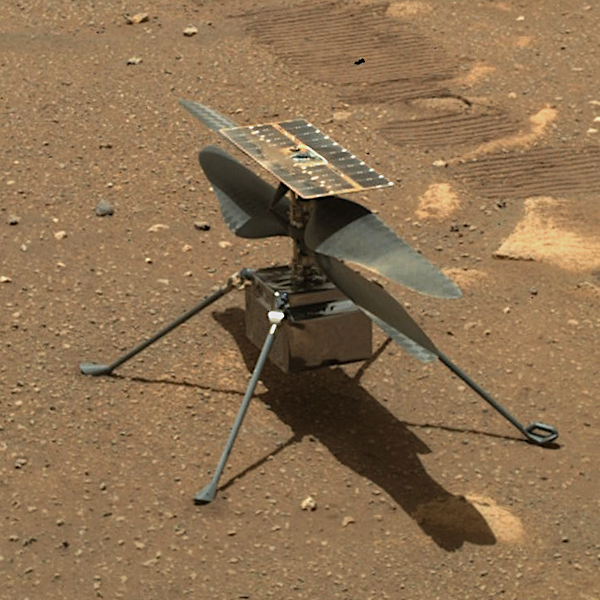
On 19/04/2021, NASA’s Ingenuity Mars Helicopter completed the first powered, controlled flight on another celestial body when it lifted off from the surface of Mars at Jezero Crater. The helicopter, which arrived attached to the Perseverance rover as part of the Mars 2020 mission that landed on 18/02/2021, conducted its maiden test at a site later named Wright Brothers Field. Ingenuity rose to an altitude of about 3 meters, hovered briefly, and then descended to land safely, with a total flight duration of approximately 39.1 seconds. The successful demonstration confirmed that powered flight is possible in Mars’s extremely thin atmosphere.
The solar powered helicopter weighs about 1.8 kilograms and uses two counter rotating carbon fiber rotors spanning roughly 1.2 meters. Because the Martian atmosphere is only about 1 percent as dense as Earth’s at sea level, Ingenuity’s rotors spun at approximately 2,400 to 2,500 revolutions per minute to generate lift. During the first flight, onboard sensors and cameras tracked altitude, stability, and performance, while Perseverance recorded the event from a distance. Telemetry confirming the flight was transmitted back to Earth after the data relay through Mars orbiters.
To mark the achievement, NASA named the flight zone Wright Brothers Field and Ingenuity carried a small piece of fabric from the Wright Flyer aircraft flown in 1903. The helicopter was initially planned as a short technology demonstration of up to five flights over about 30 days. Following the success of the first flight, Ingenuity continued operations and performed multiple additional sorties, demonstrating aerial scouting capabilities that could support future robotic and human exploration of Mars.
#mooflife
#MomentOfLife
#MarsExploration
#NasaIngenuity
#AerodynamicFlight
#PlanetaryScience
#InSituResourceUtilization
Primary Reference
Ingenuity (helicopter)

Explore the Life Moments of
 AI Twin